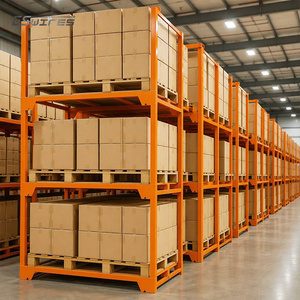
Industrial Storage Solutions
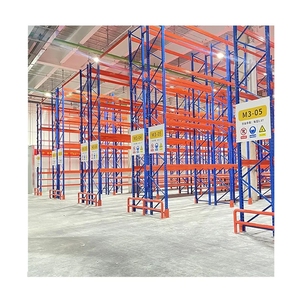
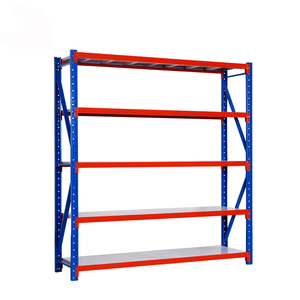
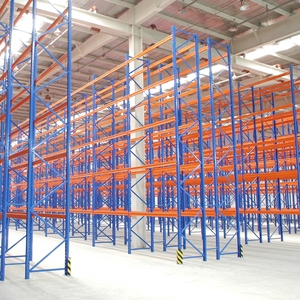
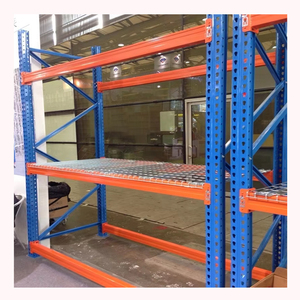
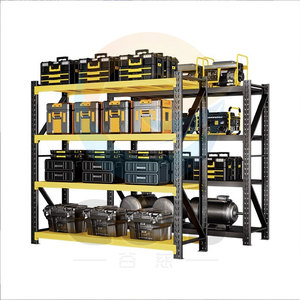
Engineered Heavy-Duty Pallet Racking Systems
Explore our top-tier, precision-engineered industrial shelving and pallet rack solutions manufactured for maximum spatial efficiency, structural safety, and high-density warehouse storage.
20+
Years Manufacturing Mastery
85+
Export Destination Countries
100%
RMI / EN 15512 Compliance
500k+
Pallet Positions Installed
Industry Whitepaper
Strategic Engineering and Procurement Blueprint for High-Density Pallet Shelving Systems
Modern supply chain architecture demands unprecedented levels of volumetric efficiency, dynamic structural integrity, and long-term durability. As global commerce accelerates toward automated logistics and micro-fulfillment models, selecting the correct pallet shelving racks suppliers and exporter transitions from a routine facility purchase to a strategic infrastructure investment. Storage racking systems are no longer passive steel frameworks; they are structural assets engineered to interact flawlessly with automated guided vehicles (AGVs), material handling equipment (MHE), and warehouse management software (WMS).
When procuring heavy-duty pallet racking, enterprise buyers must navigate complex engineering standards including ANSI/RMI MH16.1, European EN 15512 specifications, and localized seismic codes such as the Dominican R-001 structural regulation. Utilizing high-tensile structural steel (typically Q235B or Q355B cold-rolled profiles), top-tier rack manufacturers engineer upright frames and load beams capable of resisting static loads exceeding 45,000 lbs per bay while accommodating dynamic fork-truck impact forces and seismic acceleration risks.
"Information Gain Insight: True structural efficiency in modern racking is achieved not simply by increasing steel gauge, but by optimizing cold-formed profile geometries, beam-to-column connector rigidity, and floor slab anchor tension metrics."
Competitive Advantage
Why Global Logistics Enterprise Partner With Us
Backing every project with over two decades of manufacturing precision, finite element analysis (FEA), and strict international compliance standards.
Seismic-Resilient Engineering
Every industrial racking system is custom-designed using advanced FEA simulations. Upright frames are reinforced with heavy-gauge diagonal bracing, enlarged structural baseplates, and high-tensile anchor bolts to pass rigorous seismic shear stress tests under maximum loading conditions.
Coastal & Salt-Air Corrosion Defense
For Caribbean regions, port logistics centers, and cold-storage facilities, our components undergo a multi-stage pre-treatment wash followed by thermosetting electrostatic powder coating or Hot-Dip Galvanizing (HDG) exceeding 800 hours of salt spray testing (ASTM B117).
End-to-End Export & Free Zone Logistics
We streamline international procurement with knock-down container packaging, color-coded bay labeling, exact CAD/BIM floorplan layout documentation, and direct delivery to major regional logistics hubs including Santo Domingo, Santiago, Caucedo, and global free zones.
Comprehensive Structural Racking System Comparison
Choosing the correct racking configuration depends directly on SKU concentration, throughput volume, picking methodology (FIFO vs. LIFO), and building clear-height capabilities. The matrix below provides an engineering-level evaluation for procurement directors:
| Racking Architecture | Volumetric Storage Density | Pallet Accessibility | Inventory Flow Type | Forklift Compatibility | Target Application |
|---|---|---|---|---|---|
| Selective Pallet Racking | Standard (35% - 40%) | 100% Immediate Access | FIFO / LIFO Flexible | Counterbalance, Reach Truck | High SKU diversity, 3PL logistics, FMCG distributors |
| Double Deep Racking | High (50% - 60%) | 50% Immediate Access | LIFO (Last-In, First-Out) | Deep-Reach Pantograph Truck | Consolidated multi-pallet SKUs, cold storage |
| Drive-In / Drive-Thru | Very High (65% - 80%) | Lane-Dependent Access | LIFO (Drive-In) / FIFO (Drive-Thru) | Standard Counterbalance | Seasonal homogeneous goods, bulk cold storage |
| Radio Shuttle System | Maximum (80% - 90%) | Automated Lane Access | Software Selectable (FIFO/LIFO) | Standard Lift + Autonomous Shuttle | High-throughput food/beverage, pharmaceutical DCs |
| Industrial Mezzanines | Doubles/Triples Footprint | Manual / Conveyor Access | Continuous Multi-Tier Flow | Hand Trucks, Order Pickers | E-commerce fulfillment, spare parts, assembly floors |
Procurement Analysis
Future Industrial Procurement Trends in Heavy-Duty Storage Racking (2025–2030)
As global supply chains face ongoing volatility, high real estate costs, and labor shortages, enterprise procurement leaders are shifting away from traditional low-cost bid sourcing toward total cost of ownership (TCO) models. The coming decade will transform how enterprise buyers specify, purchase, and deploy industrial storage structures.
1. Nearshoring and Supply Chain Agility Demand
Manufacturing and logistics hubs across North America, Central America, and the Caribbean are expanding rapidly as multinational corporations shift production closer to consumer centers. Procurement strategies now prioritize rack suppliers capable of delivering modular, rapidly reconfigurable racking structures that can adapt to changing client contracts without requiring full structural replacement.
2. Decarbonization and Green Steel Sourcing
Environmental, Social, and Governance (ESG) mandates are directly influencing material selection. Modern buyers require transparency regarding the carbon footprint of steel manufacturing. Leading rack exporters are adopting low-emission electric arc furnace (EAF) steel, recyclable powder coatings, and zero-waste manufacturing processes to comply with global scope 3 carbon reduction directives.
3. Integration with Autonomous Mobile Robots (AMRs) and AGVs
Traditional racking design assumed human forklift operators with typical margin-of-error tolerances. The future of industrial procurement requires rack structures engineered specifically for robotic material handling. This includes micro-tolerance beam deflection thresholds ($L/300$ or stricter), integrated barcode guidance strips, and specialized floor plates designed to support high-frequency localized robot wheel loads.
Technology Horizon
Future Development Trends in Racking Materials & Smart Warehousing
1. Ultra-High-Strength Thin-Gauge Cold-Formed Steel
Advances in metallurgy have enabled the production of ultra-high-strength steel alloys with yield strengths exceeding 550 MPa. Modern roll-forming technologies allow manufacturers to create complex multi-ribbed upright profiles that offer superior moment-frame stiffness while significantly reducing overall steel weight, resulting in lower shipping costs and lower carbon transport footprints.
2. IoT-Enabled Structural Health Monitoring (Smart Racks)
The integration of micro-electromechanical sensors (MEMS) directly into critical rack uprights and load beams represents a breakthrough in warehouse safety. Smart racking systems utilize embedded load cells and multi-axis accelerometers to monitor static strain, beam deflection, and accidental forklift impacts in real-time. Facilities managers receive instant wireless alerts if an impact compromises dynamic load capacity, preventing catastrophic structural collapse.
3. Self-Healing Zinc-Aluminum-Magnesium (ZAM) Coatings
For outdoor storage, tropical, and highly corrosive chemical environments, traditional hot-dip galvanizing is being complemented by advanced ZAM metallic coatings. ZAM offers up to three times greater corrosion resistance than traditional galvanized coatings. Furthermore, ZAM exhibits a unique self-healing characteristic where cut edges and scratched surfaces react with atmospheric moisture to form a protective zinc hydroxide barrier, virtually eliminating red rust initiation.
Knowledge Base
Frequently Asked Questions (FAQ) for Enterprise Buyers
Detailed technical answers to critical questions encountered during international industrial racking procurement.
How do you ensure structural compliance in seismically active regions?
Our engineering team performs localized finite element analysis (FEA) based on specific site seismic zone coefficients ($S_s$ and $S_1$). We adjust upright column profiles, introduce dynamic diagonal bracing trusses, expand heavy-duty baseplate dimensions, and specify chemical anchor studs. Structural calculations comply fully with ANSI/RMI MH16.1 and EN 15512 standards, allowing your local structural engineer to verify site compliance easily.
What pallet dimensions and load profiles can your racking systems accommodate?
We manufacture custom systems tailored to standard North American GMA pallets (48" x 40"), European Euro-pallets (1200mm x 800mm and 1200mm x 1000mm), and industrial custom steel or plastic containers. Load capacities range from light-duty 500 kg (1,100 lbs) per shelf up to heavy-duty 4,000 kg (8,800 lbs) per beam level.
How are surface treatments selected for humid, coastal, or cold-storage environments?
For standard dry ambient warehouses, we utilize an advanced electrostatic thermosetting epoxy-polyester powder coating. For cold rooms with condensation, semi-open bays, or coastal facilities subject to marine salt-air corrosion, we recommend Hot-Dip Galvanizing (HDG) or Zinc-Aluminum-Magnesium (ZAM) coated components to guarantee 15+ years of maintenance-free rust resistance.
What documentation and support are provided for international shipments and assembly?
Every export shipment includes comprehensive knock-down packing lists categorized by bay types, 3D CAD/BIM layout drawings, step-by-step installation manuals, and official safe-load signage plates. On-site engineering supervision or remote video assembly support is available upon request.
What information is required to receive a customized engineering proposal and quote?
To generate an accurate layout and structural proposal, please provide: 1) Pallet dimensions including load height and max weight, 2) Building floor plan showing clear height, column grid, doors, and dock locations, 3) Forklift operational parameters (turning radius and max lift height), and 4) Facility environment details (ambient, cold room, seismic requirements).
Transform Your Warehouse Storage Efficiency Today
Send your facility architectural drawings and pallet specifications directly to our senior structural engineering team. Receive a comprehensive CAD layout and factory-direct quote within 24 hours.