High-Capacity Industrial Racking & Shelving Systems
Manufactured using cold-rolled high-tensile structural steel, rigorously tested to FEM and RMI global standards for maximum structural resilience.
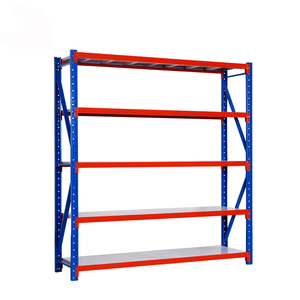
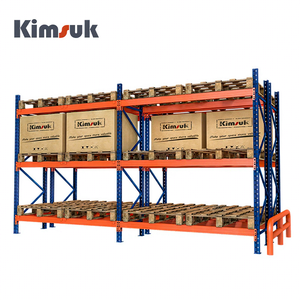
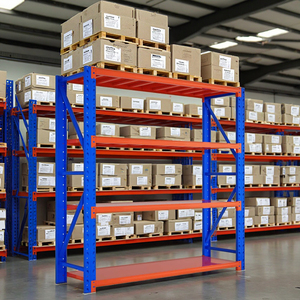
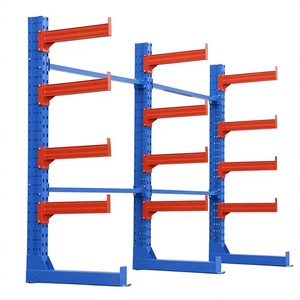
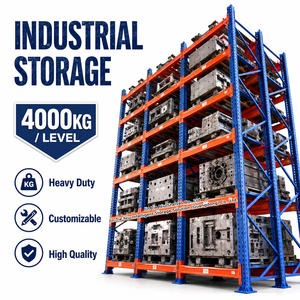
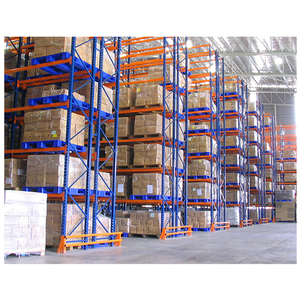
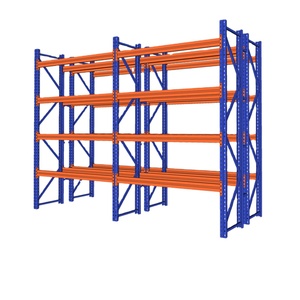
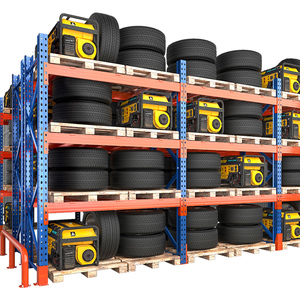
Architectural Integrity & Metallurgy in Modern Storage Racking
An engineering deep-dive into materials selection, load-bearing physics, seismic protection, and structural durability for procurement directors and facility engineers.
1. High-Tensile Steel Profiles & Cold-Forming Technology
In modern industrial logistics, structural integrity is paramount. Industrial racking systems rely primarily on high-tensile cold-rolled steel alloys such as Q235B and Q355B (equivalent to SS400 and ASTM A572 Grade 50). Cold-forming roll mills shape structural profiles with complex multi-rib geometries, significantly boosting column inertia and buckling resistance while maintaining optimal deadweight.
Structural uprights utilize a continuous hole pitch design—typically 50mm, 75mm, or 76.2mm (Teardrop style)—allowing millimetric adjustment of beam elevation levels. Modern manufacturing utilizes automated CNC punching and roll-forming lines to maintain precise tolerances (+/- 0.5mm over a 12-meter profile), mitigating stress concentrations during dynamic forklift impacts and static full-capacity loads.
2. Advanced Surface Passivation & Environmental Resilience
Storage facilities operating in coastal zones, high-humidity regions, tropical microclimates, or sub-zero cold-chain freezers require sophisticated surface protection. Standard industrial racks undergo a multi-stage pretreatment process: chemical degreasing, acid rust removal, zinc-phosphate conversion coating, and final electrostatic powder coating ranging between 80μm and 120μm thickness.
For harsh chemical workshops, semi-outdoor storage yards, or coastal distribution hubs, hot-dip galvanizing (HDG) per ISO 1461 standards provides a zinc alloy barrier exceeding 65μm, shielding steel members against cathodic corrosion for decades. This engineering rigor minimizes total cost of ownership (TCO) by eliminating downtime caused by structural oxidation and metal fatigue.
3. Seismic Risk Mitigation & FEM/RMI Compliance Frameworks
Earthquake activity and soil instability present catastrophic operational risks to vertical warehouse infrastructure. Engineering compliant storage systems requires full adherence to international standards including EN 15512 (European Racking Code), ANSI MH16.1 (RMI Standard), and local building codes such as Dominican Republic's R-001 seismic regulation.
Structural calculation software models 3D finite element analysis (FEA) under combined gravitational, dynamic movement, and seismic shear forces. Key parameters include dynamic frame bracing, enlarged base plates with anchor bolts drilled into 250mm+ reinforced concrete slabs, and anti-dislodgement safety locks engineered to withstand minimum 500kg vertical upward force per beam connector.
Comparative Analysis of Storage Architecture
Select the optimal industrial rack profile aligned with your operational throughput, SKU density, floor footprint, and material handling equipment.
| System Architecture | Load Capacity per Level | Space Utilization Density | SKU Selectivity Index | Target Operational Environment |
|---|---|---|---|---|
| Selective Pallet Racking | 1,000 kg – 4,000 kg | 40% – 50% (Standard) | 100% Direct Access | High-SKU Distribution Centers, FMCG, 3PL Logistics Hubs |
| Heavy-Duty Cantilever Rack | 500 kg – 3,000 kg / Arm | 60% – 70% (Linear) | Specialized Open Access | Steel Pipes, Extrusions, Lumber, Building Materials, Rebar |
| Medium-Duty Shelving Rack | 200 kg – 800 kg | 55% – 65% (Manual) | 100% Direct Hand-Pick | E-commerce Fulfillment, Automotive Parts, Workshop Tools |
| Radio Shuttle High-Density System | 1,000 kg – 1,500 kg | 80% – 90% Maximum | Batch / Block Selectivity | Cold Storage Freezers, Beverage Bottling, High-Volume FIFO/LIFO |
| Drive-In Racking System | 1,000 kg – 2,000 kg | 70% – 80% High Density | LIFO Operational Access | Seasonal Bulk Goods, Uniform Agricultural Stock, Raw Materials |
| Automated Storage & Retrieval (AS/RS) | 500 kg – 2,000 kg | up to 95% Vertical | Automated Software Control | Smart Warehouses, Pharma, High-Bay 24/7 Fully Automated Facilities |
Why Tier-1 Global Logistics Operators Partner With Us
Combining state-of-the-art automated manufacturing with global structural engineering expertise to deliver robust racking assets.
Full In-House Manufacturing Control
From raw steel coil slitting to automated cold-roll forming, robotic laser welding, and automated powder coating lines, every component undergoes strict quality audits compliant with ISO 9001 quality systems.
Custom Engineered Structural Engineering
Our engineering team delivers tailor-made CAD, 3D structural modeling, and finite element calculations. We customize upright pitch, beam gauges, safety wire decks, and column protectors tailored to your concrete slab capacity.
Global Export & Turnkey Installation
With verified exports to over 85 countries across North America, Latin America, Europe, and Asia, we provide sea-worthy container packing, detailed installation manuals, and optional on-site supervisor dispatch.
Future Procurement Trends in Industrial Storage Systems
Key technological advancements driving modern material handling and warehouse infrastructure decisions globally.
1. Integration with Autonomous Mobile Robots (AMRs) & AGVs
Traditional static racking is rapidly evolving into robotics-ready spatial infrastructure. Modern warehouse designs incorporate wider base plates, magnetic guide track recesses, and optical sensor clearance points to facilitate seamless interaction with AGVs, AMRs, and automated reach trucks. Modern rack beams feature laser-guided target reflectors to assist automated retrieval mechanisms in high-bay structures up to 15 meters high.
2. IoT Structural Health Monitoring & Smart Sensors
Enterprise operators are increasingly implementing IoT vibration and load-cell sensors directly into critical racking uprights. These smart nodes detect physical forklift impacts, structural overload deflections, and ambient thermal expansions in real-time. Facilities can conduct preventative structural maintenance before micro-fractures lead to catastrophic rack failure, drastically lowering liability and operational risk.
3. Decarbonization & Green Steel Supply Chains
Corporate ESG directives are reshaping industrial procurement. Buyers now actively source structural racking manufactured using low-carbon "Green Steel" processed via Electric Arc Furnaces (EAF) utilizing scrap steel and renewable power. Powder coatings formulated with zero Volatile Organic Compounds (VOCs) and 100% recyclable components ensure facilities comply with global LEED certification goals.
4. High-Cube Cold Chain Density Optimization
With cold-chain logistics costs surging due to power consumption, facilities are replacing traditional selective racks with semi-automated Radio Shuttle systems and Double-Deep configurations. Maximizing cubic volume utilization inside refrigerated environments reduces the required footprint per pallet, driving down thermal loss and kilowatt-hour consumption per stored unit.
Frequently Asked Questions by Industrial Buyers
Expert answers regarding structural design, site preparation, shipping logistics, and safety compliance.
What structural parameters are required to generate a racking layout?
To produce an engineered CAD drawing and accurate quote, our structural team requires: (1) Pallet dimensions including load height and depth (W x D x H), (2) Maximum gross weight per pallet, (3) Building dimensions (length, width, clear height beneath ceiling trusses), (4) Forklift specifications including maximum lift height and aisle turn radius, and (5) Floor slab concrete thickness/PSI strength rating.
How do you guarantee rack safety in seismic regions?
We analyze historical seismic data for your warehouse geographical coordinate. Calculations comply with EN 15512 or ANSI MH16.1 (RMI) standards. We engineer heavy-duty base plates, double-anchor footings, high-gauge diagonal frame bracing, and reinforced column uprights to absorb dynamic horizontal acceleration forces without structural failure.
What is the standard production lead time and international shipping procedure?
Standard manufacturing timelines range from 14 to 25 days depending on project tonnage and surface finish (powder coat vs hot-dip galvanized). Components are bundled using steel banding, protective edge guards, and vapor-corrosion inhibitor (VCI) plastic film. We ship standard 20ft and 40ft High-Cube containers directly to global ports including Caucedo, Haina, Long Beach, Hamburg, and Rotterdam.
Can custom colors and specialized beam profiles be requested?
Yes. We offer complete RAL color matching for powder coating finishes to align with corporate branding guidelines. Upright frames and box beams can be customized in profile thickness (from 1.5mm up to 3.0mm structural steel) and configuration (step beams for timber/wire decks or box beams for heavy pallet loads).
Ready to Maximize Your Warehouse Spatial Efficiency?
Connect with our senior engineering team today for a complimentary CAD layout design, structural load analysis, and direct factory pricing.