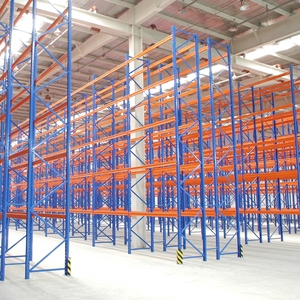
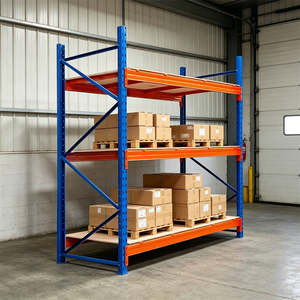
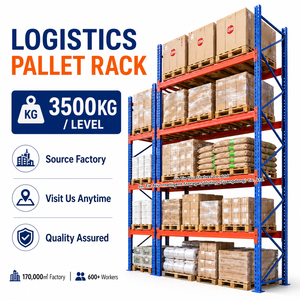
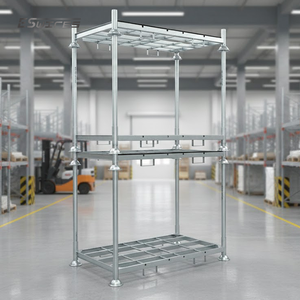
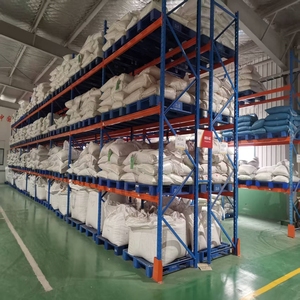
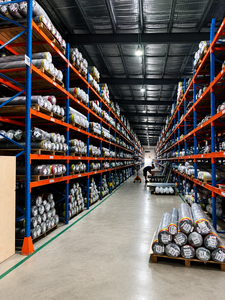
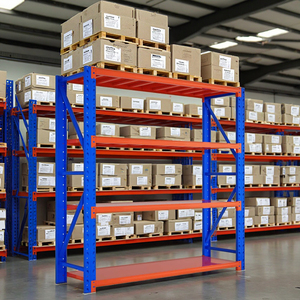
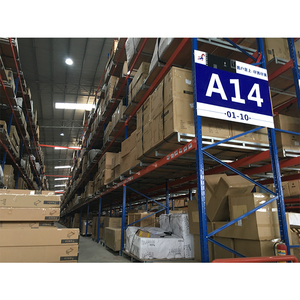
As global supply chains transition toward high-density storage, automated material handling, and maximum cubic space utilization, selecting a reliable tier-one industrial storage rack manufacturer becomes a strategic imperative. As a premier China warehouse pallet racks factory and global exporter with over two decades of heavy-duty structural engineering experience, we design, roll-form, and deliver customized storage systems that withstand rigorous operational loads, seismic dynamics, and corrosive environments. This technical whitepaper outlines modern racking benchmarks, structural engineering developments, procurement frameworks, and emerging smart logistics trends designed for distribution centers, third-party logistics (3PL) hubs, free-zone cold stores, and industrial manufacturing plants worldwide.
20+
Years Racking Expertise
85+
Export Countries Served
Q355B
High Yield Structural Steel
100%
RMI / FEM / ISO Compliant
Engineered Warehouse Storage Racking Systems
Explore our factory-direct industrial heavy-duty pallet racking line manufactured under strict quality assurance standards.
Why Partner with China's Leading Pallet Rack Exporter?
Delivering high-precision steel fabrication, certified safety engineering, and end-to-end export logistics excellence.
High Yield Q355B Steel Standard
We source prime cold-rolled structural steel coils from top-tier mills (Baosteel, Shougang Group). Utilizing high yield strength steel (Q355B/Q235B) ensures thinner profiles can deliver superior load-carrying capacity with higher deflection resistance.
Continuous Automated Roll-Forming
Our facility houses 24 automated CNC continuous roll-forming production lines. Computer-controlled punch indexing guarantees hole pitch precision within ±0.1mm, ensuring effortless beam connector engagement and uniform stress distribution across vertical frames.
International Quality Compliance
Every racking layout and structural design undergoes rigorous Finite Element Analysis (FEA) testing aligned with FEM 10.2.02, ANSI/RMI MH16.1, and AS4084-2012 codes. Certified under ISO9001, ISO14001, and CE international standards.
Advanced Electrostatic Powder Coating
Utilizing Gema automatic powder spraying systems and thermo-setting polyester epoxy powders (AkzoNobel), components undergo a 7-stage pre-treatment process including phosphating and degreasing for superior scratch resistance and 500+ hour salt spray protection.
Container Loading Optimization
Export packaging utilizes heavy-duty steel strapping, corner protectors, and custom wooden cradles. Components are bundled sequentially according to installation bay sequences, maximizing 40ft HQ container space utilization up to 98% while eliminating transit damage.
Seismic Engineering & Site Support
Our structural engineers execute site-specific seismic calculations (PGA factors), analyzing dynamic ground response to recommend appropriate base plate anchor embedment, top bracing, and horizontal framing ties for earthquake-prone regional zones worldwide.
Structural Engineering & Product Development Trends
Innovations reshaping global warehouse racking design, steel cold-forming, and high-density material handling.
The industrial storage racking sector is undergoing a rapid evolution driven by land costs, e-commerce velocity, and high-bay building designs. Modern warehouse operations demand structural integrity without sacrificing versatility. As a premier China exporter, our engineering team continuously introduces manufacturing advancements that set industry benchmarks:
Key Structural Innovation: Cold-Formed Complex Upright Profiles
Traditional open C-channel uprights are increasingly replaced by multi-ribbed cold-formed profile sections featuring up to 12-16 bending planes. These additional return flanges dramatically increase the section's radius of gyration, elevating flexural-torsional buckling strength under extreme vertical loads without adding unnecessary steel dead weight.
1. US Teardrop vs. European Connector Engineering
Global markets exhibit distinct architectural racking preferences. The North American logistics sector relies heavily on Teardrop Pallet Racking systems characterized by 2-inch punch pitch centers and self-locking pin connections that allow rapid beam height adjustments without tools. Conversely, European, Asian, and Middle Eastern distribution facilities utilize 50mm or 75mm pitch hook-and-slot connector configurations secured with double safety drop locks. Modern Chinese OEM manufacturing lines accommodate both standards seamlessly, producing interchangeable beam profiles with automated robot-welded end connectors.
2. Advanced Anti-Corrosion Finishes for Cold Storage & Coastal Facilities
Temperature-controlled supply chains (cold stores operating from -25°C down to -40°C) present severe condensation and oxidation challenges. Traditional liquid paint degrades rapidly under thermal shock. The industry transition toward Hot-Dip Galvanizing (HDG) to ISO 1461 standards (providing coating thicknesses exceeding 65–85 µm) and pre-galvanized high-yield steel sheet forming provides robust cathodic protection against rust, making these racking systems ideal for coastal logistic free-zones and agricultural cold rooms.
3. High-Density Drive-In, Push-Back, and Shuttle Automation Integration
To minimize non-productive aisle space, storage strategies have shifted toward deep-lane configurations. Drive-In racking maximizes volume utilization up to 85% by allowing forklifts to drive directly into storage bays. However, to eliminate forklift collision risks and boost pallet throughput, global buyers are increasingly specifying Radio Shuttle Racking Systems. In shuttle configurations, self-propelled battery-powered shuttles transport pallets along internal guide rails via wireless remote or Warehouse Management System (WMS) control.
Future Global Supply Chain & Procurement Trends
What industrial facility managers, warehouse developers, and procurement officers must prepare for over the next decade.
Procuring warehouse racking from China is no longer merely a purchasing transaction; it is a strategic capital expenditure investment that directly impacts warehouse operational efficiency, safety compliance, and long-term return on investment (ROI). Key forward-looking procurement trends include:
Hybrid AS/RS & High-Bay Integration
Distribution centers are building upward to 24–40 meters. Monolithic automated rack-supported buildings (where the racking system forms the structural frame of the warehouse itself) are gaining rapid market share, eliminating structural building columns and maximizing internal volume.
Smart Sensor & Real-Time Strain Tracking
IoT sensors integrated directly into critical upright frames and load beams allow warehouse managers to monitor real-time deflection, impact vibrations from forklifts, and unintended floor slab settling before dynamic structural failures can occur.
ESG & Low-Carbon Green Steel Sourcing
Environmental, Social, and Governance (ESG) criteria are altering international tender specifications. Chinese racking manufacturers adopting electric arc furnace (EAF) steelmaking and solvent-free powder coatings are giving global buyers significant carbon offset advantages.
Technical Matrix: Storage System Comparison
Comparative engineering evaluation of core pallet racking configurations to guide procurement decision-making.
| Racking Configuration |
Storage Density |
Pallet Accessibility |
Stock Management |
Forklift Requirement |
Optimal Industry Application |
| Selective Pallet Racking |
Baseline (40% - 50%) |
100% Immediate Access |
FIFO / LIFO |
Standard Counterbalance / Reach |
General Warehousing, High SKU Mix, 3PL |
| Double-Deep Racking |
Medium-High (60% - 65%) |
50% Immediate Access |
LIFO |
Deep-Reach Forklift |
FMCG, Beverage Bottlers, Bulk Goods |
| Narrow Aisle (VNA) |
High (65% - 75%) |
100% Immediate Access |
FIFO / LIFO |
VNA Turret Truck / Wire Guided |
High-Bay Distribution, Costly Land Sites |
| Drive-In / Drive-Through |
Very High (75% - 85%) |
Low (Lane Restricted) |
LIFO (Drive-In) / FIFO |
Standard Counterbalance |
Cold Storage, Seasonal Bulk, Dairy, Food |
| Push-Back Racking |
High (65% - 75%) |
Per Lane Access (2-6 Deep) |
LIFO |
Standard Counterbalance |
Fast-Moving Consumer Goods, Medium SKUs |
| Radio Shuttle Racking |
Maximum (80% - 90%) |
Automated Lane Access |
FIFO & LIFO Convertible |
Standard Loading Truck + Shuttle |
Cold Chain, Automated Food & Pharma DCs |
| AS/RS High-Bay Racking |
Maximum (85% - 95%) |
100% Computerized Access |
WMS Software Driven |
Automated Stacker Cranes / AGVs |
24/7 Automated Fulfillment Centers |
Frequently Asked Questions (Procurement & Technical FAQ)
Direct expert engineering answers to common technical queries from overseas buyers and facility managers.
What engineering information is required to receive an accurate racking layout and quotation?
To generate an optimized CAD drawing and structural design quote according to FEM/RMI standards, our engineering team requires:
(1) Building floor plan layout (DWG or PDF format) indicating clear height beneath roof trusses, column grids, dock door locations, and slab thickness/strength (e.g., 200mm slab, 30 MPa concrete);
(2) Pallet specifications including loaded width, depth, height, and maximum unit load weight (including pallet weight);
(3) Forklift model, maximum lift height, turning radius, and aisle width requirement;
(4) Desired turnover methodology (FIFO vs LIFO) and environment operating temperature (ambient vs cold storage).
How do Chinese steel grades (e.g., Q235B, Q355B) compare to international structural standards?
Chinese national standard structural steel grades fully align with European and American specifications. Q235B steel offers a minimum yield strength of 235 MPa, equivalent to European S235JR and ASTM A36. Q355B steel delivers a yield strength of 355 MPa, directly comparable to European S355JR and ASTM A572 Grade 50. Utilizing Q355B high-yield structural steel allows our factory to cold-form thinner, lighter upright and beam profiles that maintain identical or superior load capacity while optimizing shipping weight and total project cost.
What seismic load calculations are applied for earthquake-prone installation sites?
For projects located in active seismic zones, our structural engineers calculate dynamic response spectra based on local seismic hazard maps (Peak Ground Acceleration / PGA values). We evaluate frame stability using Finite Element Analysis (FEA) software, increasing upright frame depth, specifying heavy-duty base plates with double expansion anchor bolts, installing back-to-back row spacers, and adding top portal ties to ensure compliance with ANSI/RMI MH16.1 and local building code requirements (e.g., US IBC, European EN 16681).
How are components protected against rust in cold rooms and humid coastal climates?
For standard ambient distribution warehouses, components receive an electrostatic powder coating using thermo-setting epoxy polyester powder (60–80 µm film thickness) baked at 180°C–200°C. For humid coastal environments, semi-open logistics facilities, or sub-zero food cold stores subject to constant thermal condensation, we recommend Hot-Dip Galvanizing (HDG) to ISO 1461, immersing bare steel components into molten zinc at 450°C to achieve a durable 65–85 µm zinc-iron alloy coating that prevents rust for decades.
What is the deflection limit for beam structural design under full rated load?
Per FEM 10.2.02 and RMI specifications, the maximum allowable vertical deflection for a structural racking beam under full uniformly distributed load (UDL) must not exceed L/200 (where L is the clear span length of the beam). For automated shuttle or high-bay AS/RS systems operating with tight robotic tolerances, deflection limits are tightened further to L/300 or L/400 to ensure seamless material handling equipment interaction without mechanical interference.
Does your factory offer overseas installation support or supervision guidance?
Yes. We supply comprehensive installation packages with every container shipment, including CAD assembly drawings, component color-coded maps, fastener torque specifications, and step-by-step installation manuals. For large-scale logistics centers, multi-tier mezzanine platforms, or automated shuttle installations, we dispatch certified structural supervision engineers to direct local installation crews on-site or provide live digital video technical supervision.
Factory Quality Control & Manufacturing Rigor
A look into our state-of-the-art testing facility, welding robotics, and quality control protocol.
To ensure absolute operational safety across every square meter of rack installation, our manufacturing plant enforces a multi-tier Quality Assurance (QA) protocol from raw coil receipt through final container packing:
Steel Coil Ultrasonic Testing
Raw steel coils undergo chemical composition spectrographic analysis and mechanical tensile yield testing upon arrival to verify physical strength and ensure zero internal laminations or wall thickness variances.
CO2 Shielded Robotic Welding
Beam end-connector plates are joined using Panasonic multi-axis robotic welding cells with CO2 gas shielding. Continuous weld seams undergo magnetic particle inspection to eliminate slag inclusions, cold welds, or structural porosity.
Load Deflection Test Rigs
Randomly selected production batch beams are subjected to 1.5 times design load on hydraulic test benches to verify ultimate yield points, connector lock engagement, and dynamic recovery back to baseline profile dimensions.
Ready to Optimize Your Warehouse Storage Space?
Consult with our structural engineering team today for custom layout CAD designs, structural load calculations, and competitive factory-direct export pricing.
Inquire Now