Industrial Heavy-Duty Pallet Racking Systems
Engineered to FEM 10.2.02 and RMI specifications. Discover high-capacity selective, mobile, and custom structural pallet racks optimized for international distribution hubs.
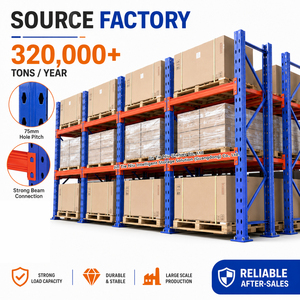
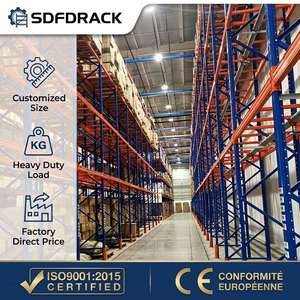
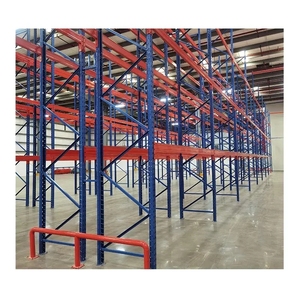
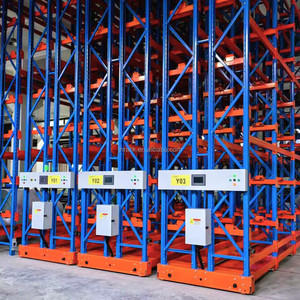
Electric Mobile High-Efficiency Automatic Warehouse Pallet Rack
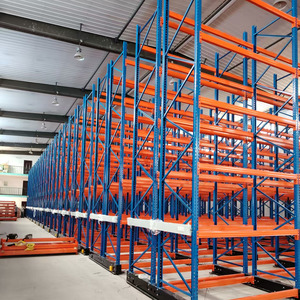
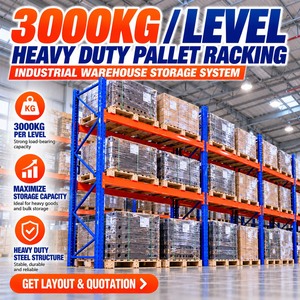
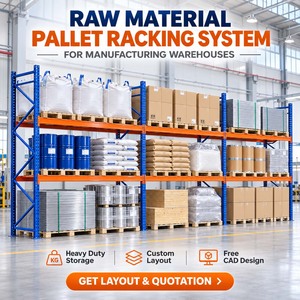
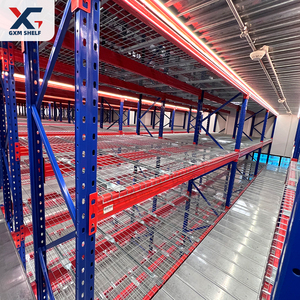
Three-Dimensional Industrial Warehouse Heavy Storage Rack System
Why Leading Global Logistics Hubs Source Racking from China
An engineering breakdown of material selection, automated cold-roll forming, finite element analysis (FEA), and anti-corrosion chemistry.
High-Yield Steel Metallurgy and Structural Integrity
In modern industrial warehousing, structural steel selection directly governs safety margins, deflection ratios, and long-term operating costs. As China's premier racking exporter, our systems are fabricated exclusively using prime high-strength cold-rolled steel coils, compliant with Q235B and Q355B material grades (equivalent to SS400 and S355JR). By utilizing high-yield structural steel, our upright columns deliver maximum bending resistance under eccentric pallet placement and dynamic forklift collisions.
Every load-bearing component undergoes continuous cold-roll forming via automated multi-pass rolling mills. This advanced manufacturing discipline preserves the grain structure of the steel while engineering intricate geometric profiles—such as our proprietary 11-fold and 13-fold column sections—yielding superior section modulus values compared to conventional structural C-channels.
Precision Roll-Forming
Utilizing CNC-controlled multi-station roll-forming lines ensures pitch tolerance within ±0.5mm across 12-meter single-piece upright columns, eliminating installation alignment errors.
Thermosetting Powder Coating
Automated 6-stage pre-treatment (degreasing, phosphating, pure water rinse) followed by electrostatic epoxy coating cured at 200°C for exceptional impact, scratch, and chemical resistance.
Seismic & Structural FEA
Every warehouse configuration undergoes rigorous Finite Element Analysis (FEA) computer simulation to verify structural sway stability, floor anchor shear stresses, and buckling factors.
Key Technological Trends Driving Industrial Racking Engineering
How modern logistics hubs are evolving from static racking frameworks to dynamic, automation-ready intelligent structural ecosystems.
1. Convergence of Semi-Automated & Fully Automated Systems (AS/RS & Shuttle Technology)
Traditional manual warehousing is undergoing a rapid paradigm shift toward density maximization. Global demand is shifting from conventional selective pallet racking toward Radio Shuttle Racking and Automated Storage & Retrieval Systems (AS/RS). By integrating self-powered motor shuttles within deep storage channels, operations eliminate up to 70% of forklift travel aisles. China’s advanced racking factories lead this evolution by fabricating specialized guide-rail profiles with structural tolerances down to ±1.0mm, ensuring continuous, jam-free automated shuttle operation.
2. Extreme Climate Finishes for Cold Chain Expansion
With global pharmaceutical and frozen food logistics accelerating, pallet racking must endure aggressive thermal cycling and humidity condensation without micro-cracking or rusting. Modern exporting trends focus heavily on hot-dip galvanizing (HDG) and specialized anti-microbial thermosetting coatings. Components subjected to sub-zero environments (-30°C) utilize specialized low-temperature carbon steel alloys (such as Q355D) that resist hydrogen embrittlement and catastrophic low-temperature impact failure.
3. Modular Sustainability & Green Steel Supply Chains
Supply chain decarbonization has elevated the importance of life-cycle assessment (LCA) in material procurement. Tier-1 Chinese racking manufacturers are adopting scrap-recycled electric arc furnace (EAF) steel and zero-VOC powder coatings. Furthermore, modular bolted-frame architectures have entirely superseded welded frames, drastically reducing ocean freight volume carbon footprints while enabling 100% component reusability when warehouse layouts need expanding.
Future Procurement Trends for Global Racking Buyers
Navigating supply chain resilience, total cost of ownership (TCO), and engineering standardization when procuring industrial steel racks from China.
Procurement directors and supply chain executives are re-engineering their capital expenditure strategies. Buying industrial pallet racking is no longer a simple price-per-kilogram transaction; it is a long-term risk management strategy. Key purchasing trends shaping international trade over the coming decade include:
Direct Factory BIM Integration
Procurement teams now demand 3D Building Information Modeling (BIM) files (REVIT, STEP) directly from Chinese manufacturers prior to contract signing, ensuring zero conflict with overhead HVAC, sprinkler piping, and lighting networks.
Shift to High-Bay Narrow Aisle (VNA)
As commercial real estate prices escalate globally, buyers are scaling vertically. Procurement for Very Narrow Aisle (VNA) systems reaching heights of 15+ meters demands specialized high-flatness tolerances and structural stiffness specifications.
Turnkey Supply & Global Compliance
International wholesale buyers favor manufacturers who offer complete turnkey packages—including structural calculations signed off by registered local Professional Engineers (PE), certified installation drawings, and custom export packing.
Pallet Storage System Performance & Density Evaluation
Compare structural attributes, inventory turnover characteristics, and capital cost profiles across common industrial pallet rack configurations.
| Racking Architecture | Storage Density | SKU Selectivity | Forklift Compatibility | Inventory Flow | Relative Cost / Pallet |
|---|---|---|---|---|---|
| Selective Pallet Racks | Baseline (40-50%) | 100% Direct Access | Standard Counterbalance / Reach | FIFO / LIFO | Low (Baseline) |
| Double Deep Racks | High (60-65%) | 50% Immediate Access | Deep-Reach Trucks | LIFO | Moderate |
| Drive-In / Drive-Thru | Very High (75-85%) | Low (Per Lane) | Standard Counterbalance | LIFO / FIFO | Moderate-High |
| Radio Shuttle System | Maximum (85-90%) | High (Lane Automated) | Standard Lift Truck + Shuttle | FIFO or LIFO | High (Automation ROI) |
| Very Narrow Aisle (VNA) | High Vertical (70%) | 100% Direct Access | Guided VNA Turret Trucks | FIFO / LIFO | Moderate-High |
| Electric Mobile Racking | Maximum (85-95%) | 100% Direct Access | Standard Counterbalance / Reach | FIFO / LIFO | Capital Intensive |
Frequently Asked Questions for Racking Importers & Distributors
Expert technical responses to critical sourcing, structural safety, compliance, and ocean logistics inquiries.
How do Chinese racking manufacturers guarantee compliance with European (EN 15512) or American (RMI) standards?
Reputable tier-1 exporters utilize certified structural software calibrated precisely to EN 15512, ANSI MH16.1, and AS4084 guidelines. Structural integrity is verified through physical destructive testing of upright frames, beam connector locks, and baseplate anchor assemblies. Full engineering calculations and material test reports (MTRs) detailing mill chemical and tensile properties are provided with each major industrial shipment.
What key data must a buyer provide to receive an accurate CAD layout and engineered quota?
To deliver an optimized layout, buyers should provide: (1) Warehouse architectural drawings showing clear height under trusses, column grids, building doors, and floor slab specifications; (2) Loaded pallet dimensions (Width x Depth x Height inclusive of cargo overhang); (3) Maximum weight per loaded pallet; (4) Operating specs of existing or planned forklifts (minimum aisle turn radius and maximum lift height); and (5) Ambient environmental conditions (freezer, coastal salt exposure, or seismic zone rating).
How are structural racks protected against damage during ocean container transit?
Export components are specialized-packed to withstand long-distance ocean shipping. Upright frames and beams are bundled using high-tensile steel strapping over plastic corner guards, wrapped in moisture-resistant corrugated film, and mounted on custom steel cradles. Heavy items like baseplates, row spacers, and anchors are packed in reinforced wooden crates. Container space is tightly bundled to prevent shifting and friction damage during transit.
What is the difference between teardrop racking and European-style beam connectors?
Teardrop racking features punch-pattern uprights compatible with standard US legacy systems, allowing boltless pin-lock beam attachment widely used in North America. European-style racking utilizes 50mm or 75mm pitch hook connectors with safety locking pins engineered for high shear resistance under strict European EN safety guidelines. Leading Chinese factories manufacture both profiles on dedicated automated punch presses.
How does thermal galvanizing compare to powder coating for cold store warehousing?
While electrostatic powder coating is ideal for standard ambient warehouses, cold storage facilities with high humidity or sub-zero temperature shifts benefit from Hot-Dip Galvanizing (HDG) or pre-galvanized components. Galvanizing creates a metallurgically bonded zinc-iron alloy layer that prevents sub-film corrosion and rust creeping even if the surface is scratched by daily forklift activity.