Executive Industry Overview & Supply Chain Dynamics
In modern global logistics and high-density warehousing, selecting a high-caliber China pallet rack systems supplier and exporter is no longer merely a purchasing decision—it is a core strategic investment. Modern supply chain operations demand extreme warehouse cube utilization, rigorous structural safety compliance, seismic resilience, and long-term asset durability. China’s advanced structural steel manufacturing ecosystem, paired with automated cold-roll forming lines and robotic continuous welding systems, provides unparalleled advantages in custom racking engineering, cost efficiency, and export scalable manufacturing.
This comprehensive industry whitepaper breaks down critical engineering metrics, international compliance standards (including European EN 15512, American RMI/ANSI MH16.1, and Dominican seismic R-001 framework), future procurement trends, and high-density rack engineering principles. Whether you operate a third-party logistics (3PL) fulfillment hub in North America, a temperature-controlled cold storage facility in Latin America, or an automated free-zone manufacturing center, this guide details how factory-direct Chinese pallet racking solutions offer measurable competitive advantages and maximal ROI.
Featured Industrial Pallet Racking Systems
Explore our flagship industrial warehouse rack systems, precision-engineered from high-tensile structural steel for ultimate load-bearing capacity and operational safety.
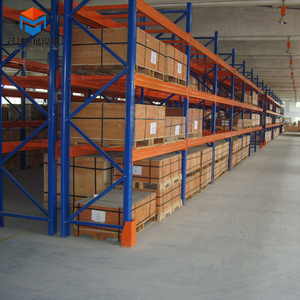
Factory Price Industrial Warehouse Heavy Duty Storage Tray Rack System Pallet Rack Store Shelf
View Product Details →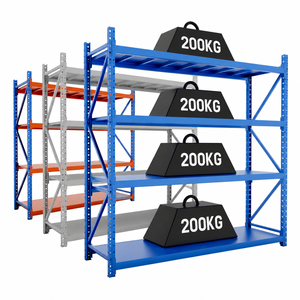
Factory Direct 4-Layer 100/200/300kg Medium Heavy Duty Pallet Racking System Steel Adjustable Long Span Warehouse Storage Racks
View Product Details →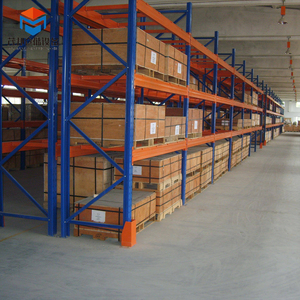
Warehouse Pallet Racking Selective Heavy Duty Industrial Storage Rack System Durable Q235 Steel Shelf Equipment
View Product Details →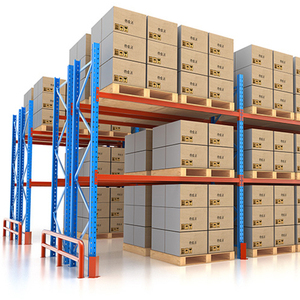
Selective Heavy Duty Warehouse Storage Rack Shelving System Pallet Racking
View Product Details →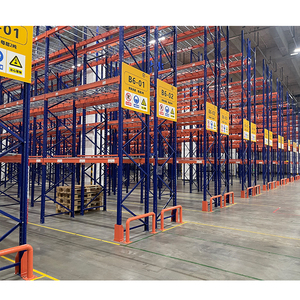
Latin America Warehouse Storage Solution Heavy Duty Steel Racking System Pallet Rack
View Product Details →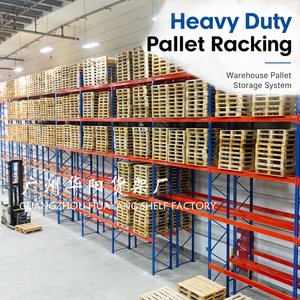
3000KG Per Level Heavy Duty Pallet Rack Industrial Warehouse Storage Steel Shelving Adjustable Pallet Racking System
View Product Details →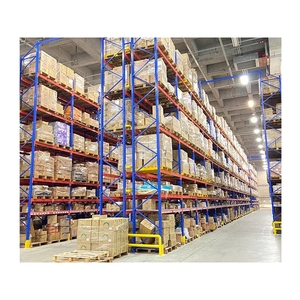
Warehouse Racking System Heavy Duty Industrial Steel Shelving Warehouse Pallet Racks for Sale
View Product Details →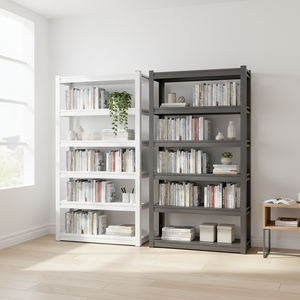
Durable 5-Tier Metal Storage Rack Wholesale Steel Adjustable Shelving Unit Rust-Proof Heavy Duty for Warehouse Living Room
View Product Details →Enterprise Capabilities: Why Global Buyers Trust Our Manufacturing
With over two decades of specialized expertise in warehouse racking production and international project execution, our manufacturing base integrates raw steel selection, cold-roll profile forming, high-precision automatic punching, continuous robotic gas-shielded welding, and automated surface finishing. Partnering directly with a top-tier Chinese racking exporter unlocks distinct structural and financial advantages:
Premium Grade Q235B & Q355B Steel
We source prime structural coil steel directly from Tier-1 state steel mills (such as Baosteel and Shougang). Our heavy-duty racking columns and box beams utilize certified high-yield Q235B and Q355B cold-rolled steel, ensuring robust resistance against structural fatigue, dynamic forklift impacts, and sustained dead-load deflection.
Seismic Design & Compliance
Our engineering design team uses advanced finite element analysis (FEA) to verify upright stability and beam-to-column connection stiffness. Racking structures are designed strictly following FEM 10.2.02, EN 15512, and ANSI/RMI MH16.1 specifications, meeting local seismic building codes (such as Dominican R-001) for high-risk zones.
Coastal-Grade Finish & Corrosion Defense
To combat aggressive atmospheric conditions in tropical or coastal port regions (such as Santo Domingo, Haina, or Caucedo), components undergo a multi-stage pre-treatment wash followed by thermosetting epoxy-polyester electrostatic powder coating (60–80 microns), or hot-dip galvanizing for cold storage and salt-spray heavy zones.
Furthermore, our full turnkey engineering approach encompasses detailed CAD layout drawings, structural loading capacity sign-offs, specialized export container stacking protocols, and comprehensive on-site or virtual installation supervision. Having supplied over 85 countries across North America, Latin America, Europe, and Southeast Asia, our logistics management guarantees seamless ocean freight handling, custom packaging by bay and component type, and zero-defect transit protection.
Technical Comparison Matrix: Industrial Storage Racking Systems
Selecting the correct racking architecture requires balancing floor space density, SKU selectivity, forklift equipment compatibility, and total investment outlay.
| Racking Architecture | Storage Density | SKU Selectivity | Inventory Flow | Forklift Compatibility | Primary Application Fit |
|---|---|---|---|---|---|
| Selective Pallet Racking | Baseline (40% - 50%) | 100% Immediate Access | FIFO / LIFO | Standard Counterbalance & Reach | High-SKU Distribution Centers, FMCG, Retail Hubs |
| Double Deep Racking | Medium-High (60% - 65%) | 50% Immediate Access | LIFO | Deep-Reach Trucks | Beverage Bottlers, High-Volume Consumables |
| Drive-In / Drive-Thru | Very High (75% - 85%) | Low (Per Lane) | LIFO / FIFO | Standard Narrow-Frame Counterbalance | Cold Storage, Frozen Food, Homogeneous Seasonal Stock |
| Radio Shuttle Racking | Maximum (80% - 90%) | Medium (Per Lane) | Automated FIFO / LIFO | Standard Forklift + Automated Shuttle | High-Throughput Cold Stores, Food Processing |
| Narrow Aisle (VNA) | High (65% - 75%) | 100% Immediate Access | FIFO / LIFO | Guided Very Narrow Aisle (VNA) Trucks | High-Bay Warehouses with Premium Land Costs |
| Cantilever Racking | Specialized Variable | 100% Open Access | N/A (Long Stock) | Standard / Side-Loader Forklifts | Steel Profiles, Pipes, Lumber, Building Materials |
Future Procurement & Technological Development Trends
1. Shift Toward Modular & Automated Hybrid Racking Systems
As warehouse labor costs escalate globally, global procurement strategies are shifting from purely manual static racking toward semi-automated and automation-ready dynamic frameworks. Sourcing pallet racking today requires forward-compatibility with semi-automated Radio Shuttles and fully automated AS/RS (Automated Storage and Retrieval Systems). Forward-thinking logistics managers are specifying high-precision rack tolerances (compliant with FEM 10.2.09) that allow easy retrofit of automated shuttles or Autonomous Mobile Robots (AMRs) without rebuilding structural upright frames.
2. Extreme Focus on Total Cost of Ownership (TCO) & Structural Longevity
Procurement intent has evolved from evaluating initial purchase price ($/pallet position) to analyzing Total Cost of Ownership across a 15-to-20-year lifespan. Low-quality racking manufactured from secondary steel or featuring non-standard beam connectors incurs elevated maintenance overheads, frequent forklift damage replacements, and safety inspection liabilities. Modern buyers prioritize suppliers providing certified structural steel mill certificates, robust powder-coating surface thickness ($>60\mu m$), anti-column impact protection, and heavy-duty seismic footplates.
3. Regional Trade Integration, Nearshoring & Caribbean/Latin American Expansion
With nearshoring initiatives accelerating manufacturing expansion in Latin America and key Caribbean commercial hubs (such as Santo Domingo, Santiago, and free-zone industrial parks), demand for specialized export racking solutions has surged. Facilities located near tropical maritime waters require specialized anti-corrosion protection against high ambient humidity and salt spray. Exporters in China are responding by engineering standardized, high-density modular units that fit efficiently inside 40ft High Cube containers, minimizing international freight costs while delivering turnkey, localized seismic compliance.
4. Sustainable Manufacturing & Circular Steel Sourcing
Environmental, Social, and Governance (ESG) criteria are increasingly embedded in supply chain tenders. Leading Chinese racking manufacturers are adopting eco-friendly closed-loop powder coating lines that eliminate volatile organic compounds (VOCs) and recycle over 98% of over-sprayed powder. Furthermore, steel circularity—utilizing 100% recyclable structural steel profiles—aligns with corporate decarbonization commitments while maintaining structural yield integrity.
Frequently Asked Questions (FAQ) - Sourcing & Engineering
Key insights and answers to common technical queries from warehouse managers, industrial structural engineers, and procurement directors.
How do Chinese racking manufacturers ensure structural compliance with international standards like EN 15512 or RMI?
Reputable Chinese manufacturers maintain dedicated structural design teams that utilize advanced FEA modeling software to evaluate frame stability, beam deflection ($L/200$ limits), and hook-connector moment capacity under full load conditions. Products are designed according to European EN 15512, FEM 10.2.02, or American ANSI/RMI MH16.1 codes. Mill test certificates (MTCs) confirming physical steel properties (tensile and yield strength) are supplied alongside physical load-test reports for total quality assurance.
Can pallet racking systems be customized for seismic zones and harsh humid climates?
Yes. Seismic-aware engineering adjusts upright profile dimensions, adds structural diagonal bracing, increases base plate thickness, and specifies heavy-duty concrete anchor bolts designed to resist shear and uplift forces. For high-humidity or coastal locations (such as Caribbean free zones or cold storage environments), components receive hot-dip galvanizing or specialized multi-stage electrostatic powder coating to prevent oxidation and rust buildup.
What technical data is required to receive an accurate racking design layout and quotation?
To generate an optimized CAD layout and price proposal, engineers require: (1) Loaded pallet dimensions (Height x Width x Depth including cargo overhang); (2) Maximum loaded weight per pallet; (3) Building clear height, floor slab load capacity, and column/door layout drawings; (4) Operating forklift type, maximum lift height, and minimum turning aisle width; and (5) Temperature requirements (ambient vs cold store).
How are pallet racks packaged and shipped to prevent damage during container transit?
Components are bundled systematically using heavy-duty steel strapping, corrugated corner protectors, plastic stretch wrap, and timber saddles. Beams and upright frames are packed separately by bay and component type, clearly labeled with part numbers matching installation drawings. This prevents metal-on-metal friction during ocean shipping and drastically simplifies unboxing and setup at your warehouse site.
What is the expected lifespan and maintenance schedule for heavy-duty industrial racking?
When installed correctly and operated within specified weight limits, industrial steel pallet racking engineered from high-grade Q235B/Q355 steel has an operational lifespan exceeding 20 years. Recommended maintenance includes routine visual inspections for forklift impact damage, verification of beam safety locks, monitoring of vertical plumbness, and ensuring base anchor bolt tension remain tight.
How do selective racking systems compare in cost per pallet position versus automated radio shuttle systems?
Selective pallet racking features the lowest initial capital expenditure per pallet position ($35–$65 average depending on height and capacity), offering 100% SKU access but requiring more aisle space. Radio Shuttle systems carry higher upfront costs ($120–$220 per position including shuttle carts) but maximize floor utilization by up to 85%, significantly reducing warehouse square footage requirements and energy costs in refrigerated facilities.
Ready to Optimize Your Warehouse Storage Capacity?
Connect directly with our engineering team for customized CAD layout designs, structural load calculations, and competitive factory-direct pricing tailored to your global logistics requirements.
Contact Us