Engineering Excellence: Top Export Warehouse Racking Systems
Explore our factory-direct heavy-duty storage equipment engineered for distribution centers, manufacturing facilities, and cold-chain logistics hubs.
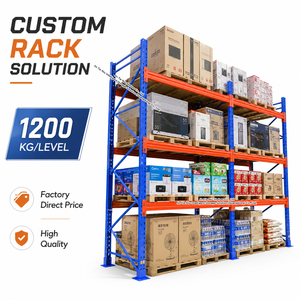
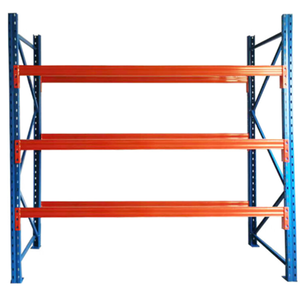
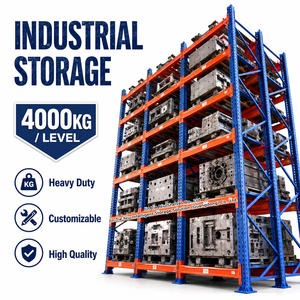
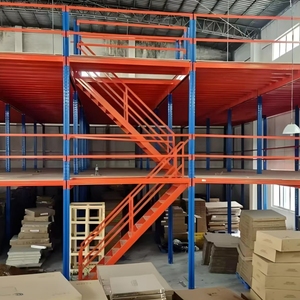
1. Technical Excellence & Enterprise Advantage in Global Racking Exports
In the highly competitive international logistics landscape, choosing a reliable warehouse racking system exporter is an enterprise-critical decision. Industrial storage systems are not merely steel frames; they represent structural engineering solutions designed to safeguard personnel, protect high-value inventory, and optimize internal material handling throughput.
Top global exporters maintain strict structural compliance with governing bodies such as the Rack Manufacturers Institute (RMI) in North America and the European Committee for Standardization (FEM / EN standards) across Europe and Latin America. Key technical factors that elevate leading manufacturers include:
High-Grade Cold-Rolled Steel
Utilizing high-tensile structural steel (Q235B and Q355B grades) ensures superior load bearing without excessive deadweight, resisting plastic deformation under maximum operational capacity.
Seismic Engineering & FEM 10.2.02
Every frame configuration undergoes Finite Element Analysis (FEA) testing for vertical load deflection, lateral horizontal sway, baseplate anchor shear, and regional seismic zone performance.
Corrosion-Resistant Surface Treatment
Automated 9-stage pretreatment washing combined with electrostatic epoxy-polyester powder coating guarantees long-term durability in tropical, humid, or sub-zero cold storage environments.
2. Strategic Future Procurement Trends in Industrial Storage
Procurement directors and supply chain executives are shifting from traditional commodity purchasing to total lifecycle value acquisition. As global trade routes reconfigure and automated fulfillment centers proliferate, several overarching trends are governing future capital expenditure in warehouse racking:
A. Shift Toward Semi-Automated High-Density Architecture
Land acquisition and logistics real estate costs have escalated exponentially in metropolitan trading hubs. Consequently, procurement strategies are pivoting away from standard selective pallet racking toward Radio Shuttle Racking Systems and Drive-In Systems. Shuttle systems utilize battery-powered motorized carts to navigate internal channels, achieving up to 85% volumetric density while reducing forklift travel distance and operational labor overhead.
B. Standardized Pallet Compatibility across Trade Corridors
Global supply chains require seamlessly interchangeable racking bay dimensions. Exporters are increasingly designing flexible beam levels capable of accommodating both North American GMA pallets (48" x 40" / 1219mm x 1016mm) and European standard Euro-pallets (1200mm x 800mm / 1200mm x 1000mm) within the same upright frame footprint without structural compromise.
C. Lifecycle Sustainability & Circularity
Enterprise procurement now emphasizes low-carbon manufacturing footprint, non-toxic powder finishes, and fully recyclable steel components. Advanced roll-forming techniques minimize raw steel consumption while maximizing sectional moment of inertia, ensuring high structural load capacities with optimized raw material utilization.
3. Technological Breakthroughs & Racking System Innovations
The humble pallet rack has evolved into an engineered, tech-enabled structural platform. Below are the prominent technological developments shaping modern warehouse racking design:
IoT Structural Health Monitoring
Embedding collision-detection sensors and strain gauges within upright column guards permits real-time alert systems for forklift impacts, tracking structural fatigue before micro-fractures compromise safety.
AS/RS Rack-Supported Clad Buildings
In Automated Storage and Retrieval Systems (AS/RS), the racking infrastructure serves dual roles: acting as internal high-density storage and functioning as the structural skeleton holding the facility walls and roof, drastically reducing construction timelines.
Advanced Surface Coatings
Thermally bonded galvanized coatings and nano-ceramic pretreatments provide superior resistance against atmospheric salt spray in coastal port warehouses and severe thermal cycling in deep-freeze distribution nodes (-30°C).
4. Technical Procurement FAQ: Frequently Asked Questions
- Pallet parameters: Loaded height, width, depth, and gross pallet weight (including payload).
- Warehouse building specs: Clear ceiling height under obstruction, column grid layout, floor slab thickness, concrete compressive strength (e.g., C25/C30 grade), and door/dock locations.
- Material handling equipment: Forklift model, maximum lifting height, aisle turning radius (AST), and mast type.
- Environmental factors: Seismic zone location, ambient working temperature, or cold-room specifications.
Ready to Optimize Your Warehouse Layout & Storage Capacity?
Consult directly with our senior structural engineers for custom CAD layouts, seismic load calculations, and competitive direct factory export quotes.