Featured Industrial Racking & Mezzanine Portfolio
Certified high-capacity racking systems, multi-tier industrial mezzanines, and structural steel solutions engineered for global supply chains.
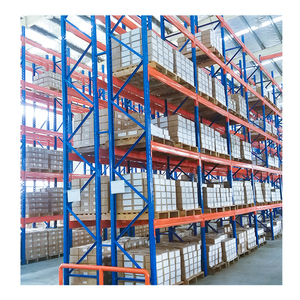
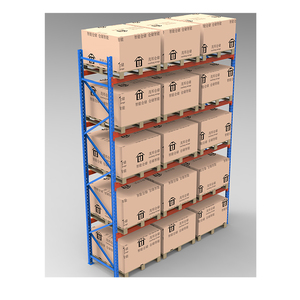
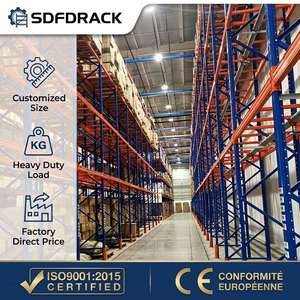
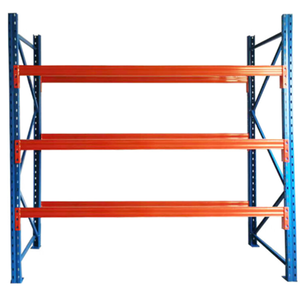
1. Executive Industry Overview: Global Demand for Structural Mezzanines & Racking
Modern global logistics is undergoing a fundamental structural transition. As land acquisition costs in primary port logistics hubs and free-trade zones accelerate by 14% to 22% year-over-year globally, enterprise warehouse managers and supply chain directors are compelled to pivot from horizontal expansion to vertical volume optimization. In this context, selecting a top-tier warehouse racking mezzanine exporter is no longer merely a procurement exercise; it is an essential capital asset strategy that directly impacts floor-space yield, operational throughput, and structural risk mitigation.
Structural racking mezzanines (also known as multi-tier rack-supported platforms) effectively multiply usable building footprint by 200% to 400% without incurring new civil construction expenses or extended municipal permitting delays. However, exported structural systems face rigorous performance demands: they must accommodate high dynamic point loads from material handling equipment, endure local seismic accelerations, resist aggressive coastal salt-air atmospheric corrosion, and interface seamlessly with both manual picking workflows and advanced automated guided vehicles (AGVs).
Technical Insight (Information Gain): Structural integrity in international mezzanine exports depends heavily on cold-formed profiles, connection node moment resistance, and material yield strength. Top-tier exporters utilize Q355B (equivalent to S355JR / ASTM A572 Grade 50) cold-rolled steel rather than standard commercial grades, providing a 42% higher yield stress benchmark ($f_y = 355 \text{ MPa}$) compared to entry-level Q235 steel.
When evaluating the top 10 warehouse racking mezzanine exporters globally, enterprise buyers must audit manufacturing execution, certified structural calculations (according to FEM 10.2.02, RMI/ANSI MH16.1, and EN 15512), automated roll-forming accuracy, and long-term surface treatment resilience under varying environmental conditions.
2. Engineering Benchmark: Industrial Mezzanines & Racking System Architectures
To establish a strategic framework for industrial storage procurement, we classify heavy-duty storage and mezzanine systems across five core structural typologies. Each system configuration serves distinct inventory turnover velocity profiles, forklift accessibility constraints, and building height parameters.
Rack-Supported Mezzanines
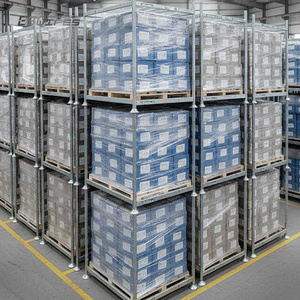
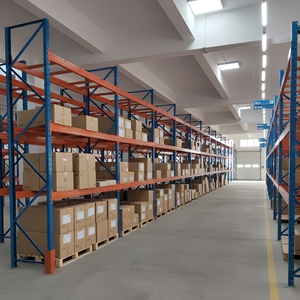
Utilizes heavy-duty selective or medium-duty upright frames as the main vertical load-bearing structure for upper catwalk decks. Highly cost-effective for high-density manual e-commerce order picking, spare parts archive centers, and high SKU-count distribution centers.
Structural Steel Platform Mezzanines
Engineered with heavy hot-rolled steel H-beams, structural columns, and secondary cold-formed C/Z purlins. Delivers clear-span open space below (up to 8+ meters grid spacing), supporting elevated office modules, conveyor sorting lines, and industrial manufacturing assembly.
High-Density Shuttle & Dynamic Flow Systems
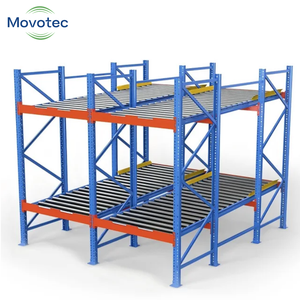
Combines deep-lane structural racking with semi-automated radio shuttles or gravity rollers (e.g., Movotec MTG100). Engineered for fast-moving consumer goods (FMCG) and cold-chain facilities operating under strict FIFO/LIFO inventory management protocols.
Seismic-Aware Structural Pallet Systems
Feature heavy-gauge footplates, enlarged anchor bolt layouts, custom horizontal frame bracing, and high moment-resistant beam-to-column connector claws designed to absorb dynamic shear forces during seismic events.
Structural Performance Comparison Matrix
| Storage System Type | Floor Footprint Utilization | Vertical Space Optimization | Direct Pallet Accessibility | Typical Load Rating | Primary Industrial Sector Application |
|---|---|---|---|---|---|
| Rack-Supported Mezzanine | Maximum (300% - 400%) | Exceptional (Up to 12m) | 100% at Picking Levels | 300 - 1000 kg / m² | E-Commerce, Automotive Parts, Retail DC |
| Structural Steel Mezzanine | High Open Space Flexibility | Very High (Clear-Span) | N/A (Open Floor Space) | 500 - 2000 kg / m² | Assembly, Elevated Offices, Heavy Equipment |
| Selective Pallet Racking | Standard Baseline (40%) | Moderate to High | 100% Direct Access | 1000 - 4000 kg / Beam Tier | 3PL Logistics, General Distribution |
| Radio Shuttle High-Density | Exceptional (Up to 85%) | Maximum Cube Volume | Batch / SKU Restricted | 1500 kg / Pallet Position | Cold Storage, Beverage Bottling, Food Processing |
| Cantilever Racking System | Specialized Linear Space | Moderate | 100% Linear Access | 500 - 2500 kg / Arm | Steel Tubing, Lumber, Hardware, Extrusions |
3. CaribRack Engineering Dominance & Global Supply Chain Capabilities
As a leading international manufacturer and global exporter with over 20 years of technical innovation, CaribRack Storage Systems S.R.L. delivers fully certified structural engineering solutions tailored for complex global logistics hubs, free zones, cold storage facilities, and industrial plants.
What sets our engineering export model apart is our comprehensive, data-driven methodology that ensures structural reliability, international regulatory compliance, and coastal-grade durability:
Advanced Structural Metallurgy & Cold-Forming
We source prime structural Q355B coils featuring tight dimensional tolerances. Our fully automated continuous cold-roll forming lines produce 11-fold profile upright posts with continuous stiffening ribs, delivering exceptional column buckling resistance under extreme axial loading conditions.
Seismic Engineering & Finite Element Analysis (FEA)
Every industrial mezzanine layout undergoes full structural FEA simulation software modeling. We design frame bracing ratios, high-ductility base plates, and anchor embedding depths according to regional seismic codes (such as Dominican R-001, US RMI/ANSI MH16.1, and European EN 15512 standard sets).
Corrosion Protection & Surface Engineering
To resist high humidity, condensation in cold stores, and coastal salt-air environments (such as port facilities in Santo Domingo, Caucedo, or Haina), our steel components undergo a 7-stage chemical pre-treatment and automatic electrostatic powder coating (60–80 µm thickness) or full hot-dip galvanizing per ISO 1461 standards.
Turnkey Export & Direct Site Installation Support
Components are pre-punched, boltless plug-in configured, color-coded, and packed by bay and floor section into standard export shipping containers. We supply complete structural engineering calculations, DWG layout schematics, and offer on-site expert installation supervision globally.
Structural Reliability Guarantee: Every racking mezzanine system exported by our facility comes backed by comprehensive structural calculations verified by certified structural engineers, comprehensive material test certificates (MTC per EN 10204 3.1), and a comprehensive warranty program.
4. Future Global Procurement Trends in Industrial Storage & Mezzanines (2025–2030)
Global supply chain directors and industrial procurement officers must evaluate emerging technological and environmental trends when committing capital to multi-decade warehouse racking and mezzanine investments. Key structural trends reshaping procurement specifications include:
1. Automated Guided Vehicle (AGV) & Autonomous Mobile Robot (AMR) Mezzanine Integration
Traditional mezzanines were specified primarily for human manual order picking. Modern high-throughput logistics facilities now specify high-flatness steel deck mezzanines capable of supporting swarms of picking robots (AMRs) and automated sorting bots. This requires mezzanine floor deflection limits to tighten from standard $L/200$ to ultra-precise $L/500$ thresholds, combined with specialized wear-resistant steel flooring plate finishes.
2. Sustainable Modular Steel Architecture & Embodied Carbon Metrics
Enterprise ESG mandates increasingly require multinational companies to track the embodied carbon footprint of warehouse fixtures. Global mezzanine exporters are adopting green steel production pathways, optimized thin-gauge high-strength cold-formed profiles (reducing raw steel weight while maintaining structural capacity), and 100% recyclable steel component design.
3. Cold-Chain Vertical Maximization in Free-Trade Zones
With global cold storage electricity and refrigeration costs rising sharply, temperature-controlled facilities are expanding vertically rather than horizontally. Multi-tier rack-supported mezzanine platforms fitted with automated shuttle channels are increasingly deployed inside cold rooms to maximize cubic thermal storage density and lower energy cost per stored unit.
4. Plug-and-Play Modular Boltless Construction
To minimize expensive on-site labor and eliminate site welding hazards, next-generation mezzanine systems emphasize fully boltless beam-to-column locking claws, pre-engineered drop-in deck panels, and integrated electrical/utility conduit channels pre-punched at the manufacturing factory.
5. Product Development & Material Engineering Horizons
The manufacturing technology underlying structural racking mezzanines is evolving rapidly. Forward-thinking exporters are investing heavily in advanced manufacturing capabilities:
- Laser-Cut Structural Beam Connections: Utilizing 3D fiber laser cutting units to achieve 0.1mm notch precision on heavy structural H-beams and connector claws, eliminating assembly friction and structural slop.
- Embedded Structural Health Monitoring (SHM) Sensors: Integration of micro-strain sensors and accelerometer nodes within critical rack columns and primary mezzanine support girders to provide real-time structural load monitoring, alerting warehouse managers to forklift impact damage or overloading.
- Hybrid Composite Deck Flooring: Transitioning from traditional heavy plywood or basic corrugated deck sheet to high-strength, lightweight steel-polymer sandwich panels that offer superior fire retardancy (Class A), sound damping, and high impact resistance.
6. Comprehensive FAQ for B2B Procurement Officers & Structural Engineers
Answers to critical structural, regulatory, and logistics questions commonly raised during enterprise procurement of exported racking mezzanines.
- Building architectural DWG drawing showing clear height under trusses, column grid centers, slab thickness, and door/dock locations.
- Uniformly Distributed Load (UDL) requirements (e.g., 500 kg/m², 1000 kg/m²) or specific point load specifications from heavy machinery or point loads.
- Number of elevated floor levels required and intended operational usage (e.g., manual carton picking, AMR sorting, office partition modules).
- Regional seismic coefficients or installation geographic location.
- Galvanized Steel Grating: Excellent ventilation, maximum fire sprinkler water passage, high durability for oily or industrial environments.
- Chequered / Tear-Drop Steel Plate over Corrugated Deck: Extremely robust for heavy trolley traffic, high point load capacity, liquid-tight floor surface.
- High-Density Heavy Duty MDF/Plywood over Steel Deck: Smooth, low-noise surface ideal for manual cart picking, office areas, and light manufacturing.