Engineered Heavy-Duty Storage Systems Matrix
Discover certified industrial warehouse pallet racks engineered for high-density storage, structural resilience, and seamless material handling integration.
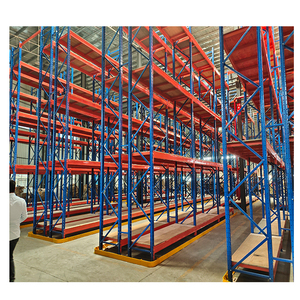
Warehouse Racking System Heavy Duty Industrial Pallet Racks System Storage Pallet Selective Racking
Offers 100% direct pallet selectivity. Designed with high-yield cold-rolled steel profiles for maximum beam rigidity and flexible beam level adaptability.
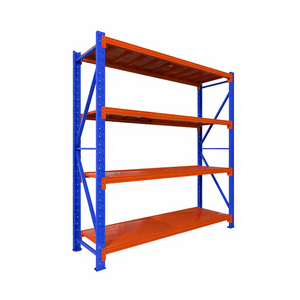
Racking Adjustable Metal Boltless Shelf and Racks Warehouse Storage Medium Duty Metal Rack Shelf
Interlocking boltless connection structure for rapid manual assembly. Ideal for fulfillment centers, spare parts picking, and medium-duty box storage.
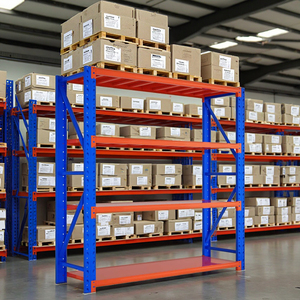
New Corrosion-Protected Steel Warehouse Racking Heavy-Duty & Light-Duty Industrial Workshop Storage Racks
Features advanced electrostatic powder coating and coastal-grade galvanized treatment to withstand extreme humidity, chemical vapors, and coastal environments.
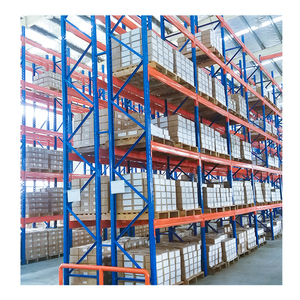
Heavy Duty Industrial Storage Rack Steel Warehouse Pallet Shelving System Supplier
High load capacity beam-to-upright frame design, tested under FEM and RMI parameters. Fully scalable for high-bay logistics centers and manufacturing facilities.
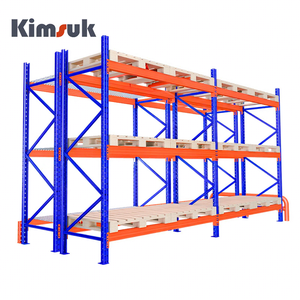
Warehouse Shelves Industrial Heavy Duty Boltless Shelf Steel Warehouse Powder Coating Metal Cantilever Racking
Purpose-engineered for linear item management including steel pipes, timber, rebar, and aluminum extrusions without front-column obstruction.
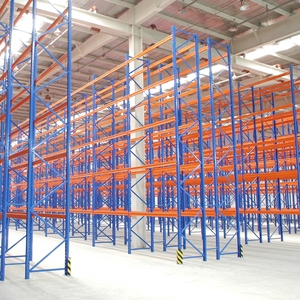
Low Price Custom 2-6 Level High Quality Pallet Racking Warehouse Storage Shelf System Industrial Stack Heavy Duty Pallet Racks
Customizable multi-tier storage platform designed to maximize volumetric air space utilization, certified for seismic stability and dynamic forklift impacts.
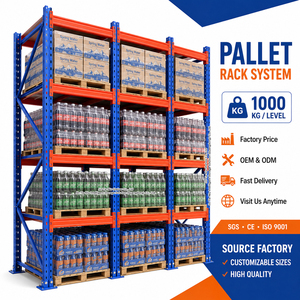
Heavy Duty Pallet Rack System for Beverage Storage Food Warehouse and Pallet Goods Racking
Specialized high-density drive-in or shuttle racking framework optimized for food & beverage cold chain logistics with FIFO/LIFO automated rotation.
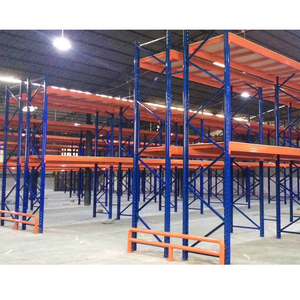
Chinese Manufacture Heavy Duty Metal Pallet Rack Shelving Wood Pallet Racks and Shelves
Hybrid structural racking system utilizing reinforced cold-rolled steel frames and solid timber/composite deck plates for heavy industrial tooling storage.
1. Executive Overview: The Structural Strategic Imperative in Modern Logistics
In the current global supply chain ecosystem, warehouse storage systems have evolved from passive, static steel frameworks into high-performance, engineering-critical infrastructure. As urban industrial real estate costs spike globally and omnichannel logistics demands unprecedented fulfillment velocity, enterprise procurement leaders must re-evaluate pallet racking procurement through a strict lens of volumetric density, structural engineering integrity, and total cost of ownership (TCO).
Selecting the right warehouse pallet racking system manufacturer or wholesaler requires navigating complex structural standards (such as EN 15512, ANSI/RMI MH16.1, and regional seismic mandates like the Dominican Republic R-001 standard), cold-formed steel yield strengths (Q235B vs. Q355B), corrosion resistance specifications, and compatibility with emerging Warehouse Automation Technologies (AGVs, AMRs, and AS/RS cranes).
2. Benchmark Analysis: Top 10 Global Pallet Racking Manufacturers & Wholesalers
Below is a comprehensive structural, technological, and manufacturing benchmark evaluating the global leaders in industrial warehouse racking production and international wholesale distribution.
1. CaribRack Storage Systems
Specialization: Custom Seismic-Resistant Racking, Caribbean & Free-Zone Turnkey Systems.
Technical Core: Over 20 years of OEM manufacturing mastery. Engineered to strict EN 15512 and RMI/ANSI MH16.1 guidelines with custom baseplates designed specifically for active seismic faults and coastal marine air exposure.
2. SSI Schaefer Group
Specialization: Fully Automated High-Bay Warehousing & Automated AS/RS Racking.
Technical Core: Industry benchmark for ultra-precise structural tolerances required by automated stacker cranes and high-speed material handling systems.
3. Jungheinrich AG
Specialization: Integrated Racking, VNA Systems & Warehouse Logistics Technology.
Technical Core: Exceptional integration between narrow-aisle (VNA) racking profile engineering and automated guided forklift systems.
4. Mecalux, S.A.
Specialization: Pallet Shuttle Systems, Selective & Movable Heavy-Duty Racks.
Technical Core: Advanced warehouse management software (WMS) pairing with semi-automated radio shuttle pallet racking frameworks.
5. Interroll Group
Specialization: Dynamic Gravity Flow, Pallet Flow & Carton Flow Systems.
Technical Core: High-precision magnetic speed controllers and durable roller modules designed for uninterrupted FIFO inventory flow.
6. Frazier Industrial Company
Specialization: Structural Steel Selective & Cantilever Racking Systems.
Technical Core: Pioneer in heavy structural hot-rolled C-channel steel manufacturing, offering extreme resistance to forklift impacts in abusive operational environments.
7. Dexion (Gonvarri Material Handling)
Specialization: Mobile Racking, Multi-Tier Mezzanines & Industrial Shelving.
Technical Core: Precision European steel roll-forming, delivering high strength-to-weight ratios and adaptable modular shelf layouts.
8. Stow Group
Specialization: Standard Pallet Racking & Dense Automation Systems (Atlas Shuttle).
Technical Core: Massive global production throughput capabilities with standardized teardrop and European beam connector configurations.
9. Daifuku Co., Ltd.
Specialization: Turnkey AS/RS Systems & Material Handling Automation Integration.
Technical Core: World-class automated warehouse integration capability, offering custom rack-supported building structures (Clad-Rack Buildings).
10. BITO Storage Systems
Specialization: Small Parts Shelving, Multi-tier Systems & Heavy Duty Pallet Racks.
Technical Core: German structural precision engineering focused on e-commerce fulfillment centers and modular multi-tier mezzanine shelf systems.
3. Structural Racking System Selection Framework
Technical comparison of primary industrial storage systems to guide engineering design and procurement decisions based on throughput, selectivity, and capital expenditure.
| Racking Architecture | Storage Density | Selectivity Rate | Forklift / MHE Compatibility | Ideal Industry Applications |
|---|---|---|---|---|
| Selective Pallet Racking | Baseline (30-40%) | 100% Direct Access | Standard Counterbalance, Reach Truck | FMCG, 3PL Distribution, Multi-SKU Retail |
| Double Deep Racking | High (50-60%) | 50% Direct Access | Deep-Reach Pantograph Truck | Cold Storage, Bottlers, Uniform Batch FMCG |
| Drive-In / Drive-Through | Very High (65-80%) | Low (LIFO / FIFO) | Standard Counterbalance (Narrow Chassis) | Frozen Food, Beverage Bottling, Raw Bulk Goods |
| Radio Shuttle System | Maximum (80-90%) | Automated Lane Access | Standard Forklift + Radio Cart | Deep Frozen Storage, High-Volume Produce |
| Narrow Aisle (VNA) | High Volumetric (60-70%) | 100% Direct Access | VNA Turret Truck / Wire-Guided Rail | High-Bay Distribution, Costly Urban Real Estate |
| Cantilever Racking | Custom Linear | Direct Arm Access | Side Loader, Standard Counterbalance | Steel Pipe, Timber, Rebar, Aluminum Profiles |
4. Strategic Procurement Trends Shaping Industrial Racking (2025–2030)
Enterprise procurement professionals and supply chain engineers must account for several major technology transformations when specifying warehouse racking systems over the next decade:
1. IoT Sensor Integration & Structural Health Monitoring (SHM)
Modern racking installations increasingly incorporate strain-gauge sensors and IoT vibration monitors directly onto structural uprights. These sensors alert safety managers in real-time if an upright experiences impact overload or structural deflection beyond ANSI/RMI safety limits, preventing catastrophic failures before they happen.
2. Transition to Ultra-High-Yield Cold-Formed Steel
Advancements in steel chemistry have allowed manufacturers to utilize Q355B and Q460 ultra-high-tensile cold-formed steel profiles. This reduces dead weight on warehouse slab foundations while maintaining superior flexural strength and higher load capacity per kilogram of steel consumed.
3. Seismic-Resistant Engineering Standards (R-001 & EN 15512)
Global climate volatility and stringent regional building codes (such as Dominican Republic R-001 seismic standards) demand that racking manufacturers provide full structural finite element analysis (FEA). Anchor bolt shear strength, baseplate surface area, and frame diagonal bracing ratios are now mathematically verified for Peak Ground Acceleration (PGA) resistance.
4. Coastal & Cold-Chain Corrosion Coating Innovations
Standard enamel paint finishes are rapidly being phased out in humid coastal distribution hubs and sub-zero cold storage facilities. Procurement contracts now demand dual-layer electrostatic thermosetting powder coatings or hot-dip galvanizing (HDG) conforming to ISO 1461 to prevent subsurface rust and structural degradation.
5. Engineering Innovations in Racking Product Development
Leading manufacturers are re-engineering core rack components to enhance operational safety, speed up on-site installation, and accommodate dynamic automation equipment:
Modular Boltless Beam Connectors & Automatic Safety Locks
Traditional bolted beam configurations have been largely replaced by 3 to 4-hook heavy-gauge cold-formed beam connectors featuring automatic spring-lock mechanisms. This ensures that upward forklift dislodgement forces cannot disengage the storage beam, dramatically reducing accidental load spills.
Hybrid Cold-Chain Shuttle Rails
For high-density food & beverage warehouses, new shuttle tracking profiles incorporate wear-resistant stainless steel guiding tracks embedded directly inside structural cold-formed steel channels. This mitigates sub-zero ice buildup and ensures sub-millimeter positional guidance for wireless radio shuttles.
6. Executive Procurement FAQ: Warehouse Racking Engineering & Selection
Clear, authoritative technical answers addressing structural engineering, seismic regulations, material specifications, and installation parameters.
Q1: How do you verify pallet racking safety compliance in seismic regions like the Dominican Republic (R-001)?
Every structural layout undergoes rigorous Finite Element Analysis (FEA) evaluating frame height-to-depth ratios, dynamic horizontal shear force distribution, and anchor bolt pulling resistance in accordance with EN 15512 and RMI/ANSI MH16.1 specifications. CaribRack provides certified load calculations and structural data sheets that allow local structural engineers to easily verify compliance with regional codes such as the Dominican Republic R-001 seismic regulations.
Q2: What is the difference between Q235B steel and Q355B steel in pallet rack manufacturing?
Q235B is a standard carbon structural steel with a minimum yield strength of 235 MPa, widely used for standard light to medium-duty storage beams. Q355B is a high-strength low-alloy cold-formed steel with a yield strength of 355 MPa. Using Q355B allows racking engineers to produce lighter upright frames that support higher total bay loads (up to 20,000 kg/bay) while significantly reducing raw material consumption and transport shipping costs.
Q3: How do coastal atmospheric humidity and salt spray impact surface coating specifications?
In humid tropical or coastal port environments (e.g., Santo Domingo, Haina, Caucedo, or Puerto Plata), standard paint will quickly experience micro-cracking and rust flaking. We recommend a minimum 60–80 micron thick electrostatic thermosetting epoxy-polyester powder coating over an iron-phosphate pretreatment line, or hot-dip galvanizing (HDG) conforming to ISO 1461 for cold storage rooms and outdoor covered canopy storage yards.
Q4: What crucial parameters are required to calculate a warehouse racking quotation and CAD drawing?
To generate an accurate engineering layout, our team requires: (1) Pallet footprint dimensions including load overhang (H x W x L), (2) Maximum gross pallet weight, (3) Building clear ceiling height and floor slab concrete thickness/PSI rating, (4) Position of internal building columns, loading docks, and fire sprinkler clearances, and (5) Specific forklift model turning radius and maximum lift height.
Q5: Why is wire decking preferable to timber or solid steel deck panels on selective racks?
Galvanized steel wire mesh decking improves warehouse fire safety by allowing ceiling fire sprinkler water to pass freely through all racking levels, keeping building installations compliant with NFPA guidelines. Furthermore, wire decking prevents dust accumulation, improves visibility for overhead forklift operators, and accommodates undersized or damaged pallets safely.
Q6: What lead time should buyers anticipate for custom international racking shipments?
Manufacturing lead times typically range from 2 to 4 weeks depending on order volume and finish complexity (powder coating vs. hot-dip galvanizing). Containerized shipping times vary based on ocean freight destination routes. All structural components are bundled, labeled by bay number, and packed with steel-strapped protective corner guards to simplify container unloading and on-site sorting.
Request Your Custom Engineering Layout & Technical Specification Catalog
Connect with senior structural racking engineers today to optimize your warehouse floor plan, calculate structural load limits, and receive direct factory pricing.