20+
Years Engineering Expertise
85+
Global Export Markets
EN 15512
Seismic & Compliance Standard
4000kg
Max Beam Capacity / Level
Executive Summary: Navigating Modern Industrial Racking Procurement
As global supply chains transition toward maximum vertical cubic utilization and automated intralogistics, selecting an industrial shelf rack manufacturer is no longer merely a commodity purchasing decision. It is a critical structural engineering investment. Warehouse operations, third-party logistics (3PL) providers, and cold-storage facilities face accelerating land acquisition costs, stringent seismic compliance mandates, and heightened safety regulations.
This technical report and buyer’s guide evaluates the global landscape of industrial racking manufacturers and wholesalers. Designed for logistics directors, procurement managers, and civil engineers, this whitepaper breaks down structural integrity specs, steel grade selection (such as cold-rolled Q235B vs structural Q355B), anti-corrosion surface treatments, and total cost of ownership (TCO) variables across international tier-1 manufacturers.
"Optimum rack design isn't just about static load capacity. It requires comprehensive Finite Element Analysis (FEA), dynamic seismic drift safety factors, and precise compliance with European EN 15512, US RMI/ANSI MH16.1, and regional structural standards."
Top 10 Industrial Shelf Rack Manufacturers & Wholesalers
Below is an analytical evaluation of the leading global manufacturers and direct-factory wholesalers specializing in heavy-duty industrial pallet racking, cantilever systems, automated high-bay structures, and industrial mezzanine platforms.
#01
Nova / CaribRack Storage Engineering
Recognized for over two decades of engineering superiority, Nova/CaribRack manufactures custom heavy-duty selective, drive-in, radio shuttle, and cantilever systems. With certified compliance with EN 15512, ANSI MH16.1, and regional codes like Dominican R-001, they provide high-yield structural steel racking with customized electrostatic powder coatings tailored for humid, coastal, and sub-zero cold storage environments.
#02
SSI Schaefer
A German multinational leader in automated material handling and modular shelf rack systems. SSI Schaefer excels in complex automated storage and retrieval systems (AS/RS), shuttle racks, and high-bay clad-rack structures built for automated distribution hubs worldwide.
#03
Interlake Mecalux
Holding a dominant market position across the Americas and Europe, Interlake Mecalux produces versatile roll-formed teardrop racking alongside automated shuttle systems. Their engineering focuses on rapid assembly, multi-tier pallet racking, and WMS software integration.
#04
Jungheinrich AG
Headquartered in Hamburg, Jungheinrich combines heavy-duty rack manufacturing with guided VNA forklift tech. They are a premier supplier of high-density vertical racking systems tailored for tight footprint fulfillment centers.
#05
Daifuku Co., Ltd.
Japan’s largest material handling system integrator, Daifuku offers heavy-duty automated rack structures designed for semiconductor, automotive, and cold-chain manufacturing plants requiring sub-millimeter tolerances.
#06
Unarco Material Handling
A US-based pioneer in heavy industrial racking, Unarco is renowned for durable T-bolt structural steel racks, push-back systems, and heavy-duty carton flow channels built for high-impact distribution centers.
#07
Frazier Industrial Company
Frazier is famous for utilizing hot-rolled structural steel channels rather than roll-formed sheet steel. Their heavy-duty racking systems are engineered for severe forklift impact resistance in rough industrial yards and beverage operations.
#08
AR Racking
Operating out of Spain, AR Racking designs and manufactures fully automated structural steel storage systems with advanced galvanization finishes, emphasizing European EN standards and zero-defect automated production lines.
#09
Ridg-U-Rak
Producing over 100 million pounds of rack products annually, Ridg-U-Rak offers universal teardrop, slotted, and structural column racking equipped with patented beam lock mechanisms and seismic base plate options.
#10
Kardex Remstar
Kardex leads the vertical lift module (VLM) and automated industrial shelving niche. Ideal for high-density small-parts storage, pharmaceutical centers, and precision aerospace hardware warehousing.
Engineering Comparison & Selection Matrix
Selecting the optimal industrial shelf rack configuration requires balancing storage density against SKU accessibility and material handling equipment compatibility. The table below outlines key technical metrics for decision-makers:
| Racking System Type | Storage Density | Pallet Accessibility | Target Load Capacity | Ideal Industry Application |
|---|---|---|---|---|
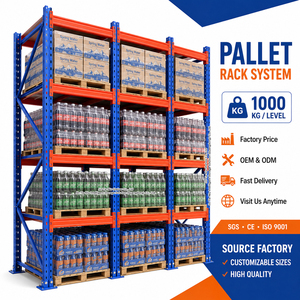
| Selective Pallet Racking | Baseline (30–40%) | 100% Immediate Access | 1,000kg – 3,500kg / level | 3PL Logistics, Retail DCs, High SKU Diversity |
| Double-Deep Racking | High (50–60%) | 50% Immediate (LIFO) | 1,500kg – 2,500kg / level | FMCG Importers, Beverage Bottlers |
| Drive-In / Drive-Through | Very High (75–85%) | Lane Dependent (LIFO/FIFO) | 1,000kg – 2,000kg / pallet position | Cold Storage, Frozen Food, Homogeneous Goods |
| Radio Shuttle Racking | Maximum (85%+) | Semi-Automated (FIFO/LIFO) | 1,500kg – 2,000kg / pallet position | High-Throughput Food & Beverage, Deep Cold Stores |
| Cantilever Racks | Specialized Linear | 100% Frontal Load Access | 500kg – 5,000kg / arm | Pipes, Rebar, Lumber, Aluminum Extrusions |
| Industrial Mezzanine Racks | Vertical Space Multiplier | Multi-Level Manual / Conveyor | 300kg – 1,500kg / m² floor space | E-commerce Picking, Free-Zone Factory Buffer |
Future Procurement & Industrial Rack Development Trends (2025–2030)
The industrial storage equipment sector is undergoing a massive transformation driven by industrial automation, material science innovations, and sustainability mandates. Procurement executives must evaluate five macro trends shaping the market:
1. Convergence of Structural Racking with AS/RS Automation
Conventional static racking is increasingly giving way to semi-automated and fully automated storage systems. Automated Stacker Cranes (AS/RS) and self-guided Radio Shuttles demand ultra-precise structural manufacturing tolerances (within ±1.5mm deflection tolerances over 12-meter heights). Tier-1 manufacturers are now employing automated robotic welding and CNC roll-forming lines to eliminate structural variation.
2. Advanced Surface Coatings for Tropical & Sub-Zero Environments
Coastal logistics hubs, island distribution networks (such as the Dominican Republic and Caribbean zone), and humid processing facilities experience rapid oxidation when using substandard paint finishes. High-gain manufacturers are adopting hybrid coating techniques—combining electrostatic epoxy powder coats (60–80 µm thickness) with hot-dip galvanized structural steel (conforming to ISO 1461 with zinc protection exceeding 85 µm) to withstand salt mist and condensation.
3. Circular Steel Sourcing & Carbon Footprint Transparency
Global ESG regulations require enterprise buyers to audit Scope 3 embodied carbon in warehouse steel structures. Future-focused rack manufacturers are transitioning to green steel produced via Electric Arc Furnaces (EAF) utilizing recycled scrap steel, reducing carbon intensity per ton of manufactured rack by up to 45%.
4. AI-Enhanced Finite Element Analysis (FEA) & Dynamic Seismic Design
Seismic zoning regulations are becoming stricter worldwide. Advanced FEA software allows structural engineers to simulate real-world ground motion, forklift impact torque, and asymmetric loading profiles. Racks engineered with seismic base plates, heavy-duty floor anchor bolts, and gusseted beam-to-column connectors prevent cataclysmic rack collapse during seismic events.
Why Partner With Nova / CaribRack Engineering Group
With more than 20 years of direct racking manufacturing expertise, Nova / CaribRack delivers end-to-end engineered warehouse storage solutions tailored for high-load industrial facilities, free-zone manufacturing plants, and cold-chain hubs worldwide.
Seismic Engineering Compliance
Engineered according to EN 15512 and RMI ANSI MH16.1 standards, guaranteed to pass stringent local structural engineering audits.
High-Grade Q235B / Q355B Steel
Formed exclusively from prime cold-rolled steel coils with high yield strength, offering verified load capabilities up to 4000kg/layer.
Coastal & Cold-Storage Protection
Heavy electrostatic powder coating and hot-dip galvanized options designed to resist tropical ocean air corrosion and cold-room condensation.
Turnkey Export & Installation
Precise bay-labeled container packing, detailed assembly CAD blueprints, remote engineering support, and optional on-site supervision.
Ready to optimize your warehouse storage capacity and structural safety?
Inquire NowFrequently Asked Purchasing & Technical Questions (FAQ)
Answers to critical structural engineering, supply chain logistics, and installation queries raised by enterprise procurement officers.
How do I verify the seismic structural calculations of imported industrial racking?
Seismic calculations must be validated against international design codes such as EN 15512 (European standard) or ANSI/RMI MH16.1 (US standard). Professional manufacturers provide stamped structural engineer calculations detailing beam deflection limits (typically L/200), upright frame column buckling safety factors, anchor bolt pull-out shear stress ratings, and local seismic zone coefficients (such as Dominican R-001 or US IBC codes).
What is the structural difference between Q235B and Q355B steel in rack manufacturing?
Q235B steel offers a minimum yield strength of 235 MPa and tensile strength up to 470 MPa, serving as the standard for conventional heavy-duty pallet racking. Q355B is a high-strength low-alloy structural steel with a yield strength of 355 MPa. Using Q355B allows structural engineers to specify thinner gauge profiles or achieve significantly higher load ratings (e.g., up to 4,000kg/beam level) without increasing overall steel weight.
Should I choose roll-formed teardrop racking or structural steel racking?
Roll-formed teardrop racking utilizes lighter cold-rolled sheet steel with clip-in beam locks, offering fast installation, lower initial purchasing costs, and easy shelf adjustment—ideal for general warehousing and retail distribution. Structural steel racking uses hot-rolled structural C-channels bolted together, providing maximum impact resistance against forklift damage. Structural racking is strongly recommended for beverage plants, heavy manufacturing, and harsh freezer environments.
How does coastal humidity affect rack finish selection?
Facilities located within coastal marine corridors or high-humidity regions require superior rust resistance. Standard indoor powder coatings may fail over time if moisture penetrates microscopic pores. We recommend electrostatic epoxy-polyester powder coats with pre-treatment zinc phosphate wash (minimum 70 µm thickness), or hot-dip galvanizing (ISO 1461 compliant) for outdoor racks, open sheds, and cold-chain humidity chambers.
What information is required to receive a customized CAD rack layout and price quote?
To produce an engineered rack design, please provide: (1) Pallet dimensions including load overhang (Length × Width × Height), (2) Maximum loaded pallet weight, (3) Building CAD floor plan showing clear height below roof trusses, column locations, and fire door positions, (4) Forklift truck specifications (maximum lift height, turning radius, aisle width requirement), and (5) Operational flow (FIFO or LIFO preference).
How are heavy industrial racking systems containerized and shipped for international export?
Components are bundle-wrapped by bay profile, strapped onto steel dunnage, and edge-protected to eliminate transit scratches. Upright frames, horizontal beams, and wire decks are optimized for 40ft High Cube (40HC) ocean shipping containers. Clear component tagging corresponds directly to included assembly CAD drawings for swift clearance at destination ports.
Transform Your Warehouse Space Efficiency Today
Contact our certified structural engineering team for a free CAD layout design, seismic safety assessment, and direct factory price quote.