Featured Industrial Storage Racks & Pallet Systems
Engineered for extreme structural capacity, rapid assembly, and optimal volumetric space utilization across global logistics hubs.
Executive Industry Whitepaper: Navigating Global Industrial Pallet Racking Procurement
Modern warehousing, 3PL logistics hubs, cold chain facilities, and free-zone manufacturing centers face unprecedented pressures to optimize cubic storage density while maintaining absolute structural safety and operational velocity. In 2025, selecting the right industrial pallet storage racks supplier and wholesaler requires looking far beyond upfront material costs per frame or beam. Procurement managers, supply chain directors, and structural engineers must evaluate high-yield cold-rolled steel integrity, finite element design verification, surface coating longevity under adverse microclimates, and total cost of ownership (TCO).
Global logistics corridors—ranging from North American distribution hubs to coastal free-trade zones in Latin America, the Dominican Republic (Santo Domingo, Santiago), and Europe—demand specialized engineering tailored to unique operational environments. Whether handling high-velocity SKU throughput using selective pallet racking, accommodating timber and pipe inventory with cantilever structures, or driving down cost-per-pallet position via Radio Shuttle AS/RS automation, partnering with an experienced tier-1 manufacturer provides decisive competitive advantage.
Engineering Insight: The Information Gain Difference in Racking Procurement
Standard generic racking quotes frequently omit critical structural parameters such as dynamic frame buckling thresholds under seismic movement, base-plate anchor shear ratings, and micro-cracking risks in low-grade electrostatic powder finishes. A true enterprise manufacturer engineers systems according to internationally recognized codes: ANSI MH16.1 (Rack Manufacturers Institute), EN 15512 (European Racking Code), and regional standards such as Dominican Republic's R-001 Seismic Building Regulation.
To assist global procurement officers in establishing rigorous supplier evaluation frameworks, the following comparative engineering matrix outlines core industrial storage methodologies:
| Racking Architecture | Storage Density Rating | Direct SKU Accessibility | Primary Material / Steel Grade | Optimal Industry Application |
|---|---|---|---|---|
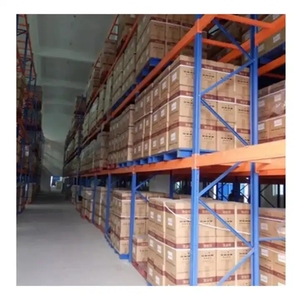
| Selective Pallet Racking | Baseline (100% Aisle Space) | 100% Instant Access | Q235B / Q355B Cold-Rolled Steel | 3PL Logistics, E-commerce, FMCG Distribution |
| Double Deep Racking | Medium-High (+30-40% Density) | 50% Immediate Access | High-Tensile Structural Steel | Cold Storage, Beverage Bottlers, Bulk Goods |
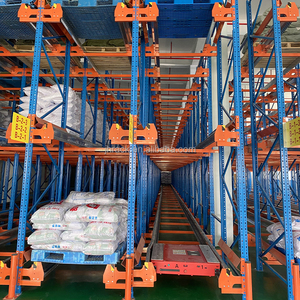
| Radio Shuttle & AS/RS | Ultra-High (up to 85% Volumetric) | Automated Batch Access | Precision-Engineered Micro-Alloy Steel | Automated Frozen Food, High-Bay Warehouses |
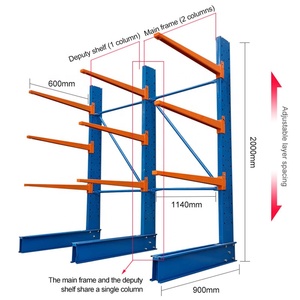
| Heavy Duty Cantilever | Specialized Linear Density | 100% Unobstructed Linear | Hot-Rolled I-Beam Structural Steel | Lumber, Steel Rebar, PVC Pipes, Building Material |
| Industrial Steel Mezzanine | Multi-Level Footprint Expansion | Full Platform Accessibility | Heavy Gauge Heavy-Duty Columns & Beams | Free-Zone Manufacturing, Order Assembly Lines |
Key Development & Technological Trends in Industrial Pallet Racking
The industrial storage equipment sector is undergoing a rapid paradigm shift driven by automation, metallurgical innovation, and smart warehouse execution systems. Procurement leaders must understand these core technological developments when specifying equipment for next-generation warehousing projects:
1. High-Yield Q355B Alloy Metallurgy
Transitioning from traditional mild structural steels to micro-alloyed, high-yield Q355B cold-rolled steel. This reduces total deadweight load on concrete floor slabs while boosting beam carrying capacities beyond 4,000 kg per level without beam deflection.
2. Advanced Coastal & Cold-Room Coatings
Application of multi-stage thermocured electrostatic epoxy-polyester powder coating and hot-dip galvanization (HDG). These treatments resist salt-air corrosion in coastal port facilities (e.g., Caucedo, Haina, Miami) and prevent blistering in high-humidity cold rooms.
3. Non-Linear Finite Element Seismic Engineering
Modern pallet rack uprights feature computer-modeled drop-lock safety hooks, heavy-duty floor anchor plates, and cross-bracing angles tailored to regional seismic hazard profiles. This guarantees structural stability during moderate to severe earth vibrations.
Additionally, modular boltless connection systems are virtually eliminating tool-heavy installations. Interlocking beam connector claws with automated safety pin locks ensure immediate structural engagement, drastically slashing on-site installation timelines and labor costs for major distribution center buildouts.
Future Strategic Procurement Trends for Industrial Warehouse Racking (2025–2030)
As global supply chains navigate economic volatility, real estate cost inflation, and labor shortages, procurement strategies surrounding heavy-duty industrial storage racks are evolving from tactical purchasing to strategic capital asset management. Enterprise buyers must align with suppliers capable of supporting the following future-facing procurement paradigms:
-
01Hybrid Storage Architecture & Automation Integration:
Buyers are moving away from purely manual racking. Future-proof procurement requires racking infrastructure built to seamlessly accommodate semi-automated Radio Shuttles today, with built-in structural pathways for full Autonomous Mobile Robot (AMR) and stacker crane (AS/RS) integration tomorrow.
-
02Strict Adherence to Environmental, Social, and Governance (ESG) Standards:
Leading wholesalers and manufacturers are expected to deliver fully traceable, zero-waste steel sourcing. Fully recyclable high-grade steel components paired with eco-friendly VOC-free powder coating processes are now standard prerequisites in enterprise B2B RFQs.
-
03Turnkey Packaging, Container Loading, and International Freight Efficiency:
With ocean freight rates fluctuating, strategic buyers prefer suppliers who engineer custom stackable packaging bundles. By optimizing container loading volume per 40ft HQ container and labeling components bay-by-bay, suppliers reduce freight costs by up to 18% while eliminating transit damage.
Enterprise Manufacturing Advantages: Why Partner with CaribRack Storage Systems
Backing your industrial warehousing projects with over 20 years of racking manufacturing excellence, CaribRack Storage Systems S.R.L. stands as a global leader in engineered warehouse storage equipment. Serving logistics hubs across North America, Europe, Latin America, and the Caribbean (including Santo Domingo, Santiago, and free-zone industrial parks in the Dominican Republic), our manufacturing capabilities combine raw engineering power with localized project support.
Custom CAD Layout & Dynamic Load Analysis
Every facility layout is customized according to your exact loaded pallet footprint (48x40" GMA, Euro pallets, or custom containers), ceiling height clearances, forklift turning radii, and slab load-bearing capacities.
Certified Anti-Corrosion Finishing
Our automated powder-coating lines utilize multi-stage chemical pre-treatments, ensuring superior adhesion, scratch resistance, and salt-spray defense critical for coastal warehouses and humid environments.
Complete Turnkey Global Project Execution
From initial structural calculation and manufacturing to bay-labeled export packaging, container shipment, installation supervision, and post-installation safety inspection compliance.
Frequently Asked Questions (FAQ) for Industrial Racking Procurement
Essential technical and procurement insights for warehouse managers, industrial equipment wholesalers, and logistics operators.
Can pallet racking systems be custom engineered for active seismic zones?
Yes. Structural racking systems installed in seismically active regions (such as Hispaniola, the Caribbean, and Pacific Rim locations) undergo non-linear finite element structural simulation. Frame bracing patterns, base plate thickness, anchor bolt embedment depths, and height-to-depth ratios are computed strictly following EN 15512 and RMI/ANSI MH16.1 specifications. Full technical engineering calculations can be provided to support local building permit approvals (e.g., Dominican R-001 seismic regulation compliance).
Which pallet sizes and dimensions are accommodated by your selective and drive-in racks?
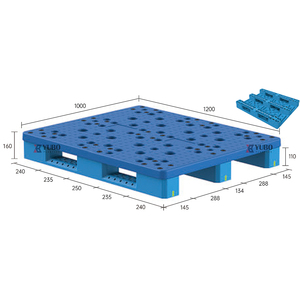
Our racking systems are fully customizable for all international pallet standards, including standard 48 x 40 inch (1219 x 1016 mm) GMA pallets prevalent in North American trade, 1200 x 800 mm / 1200 x 1000 mm European pallets, and specialized industrial plastic or wire pallets. Frame depth, beam length, and clear upright spacings are engineered based on your maximum loaded height and weight specifications.
How are structural components protected against coastal humidity and salt-air corrosion?
All cold-rolled steel profiles receive an automated multi-stage phosphatizing wash followed by architectural-grade electrostatic epoxy-polyester powder coating cured at high temperatures. For severe marine environments, open sheds, or sub-zero cold storage facilities subject to constant condensation, hot-dip galvanizing (HDG) is available to provide long-lasting zinc-alloy metallurgical protection.
What documentation is required to initiate a custom warehouse layout design?
To generate an optimized CAD warehouse racking scheme and technical proposal, our engineering team requires: (1) Architectural building layout drawing showing interior dimensions, clear height beneath trusses, door locations, and column grids; (2) Loaded pallet dimensions (Height x Width x Depth) and maximum payload weight per pallet; (3) Operating forklift type, maximum lift height, and minimum aisle turning radius; and (4) Desired SKU volume and inventory throughput strategy (FIFO vs LIFO).
Ready to Optimize Your Warehouse Storage Capacity?
Consult directly with our senior racking engineers. Receive a comprehensive CAD storage layout, structural load calculation, and competitive direct factory quotation for your upcoming project.