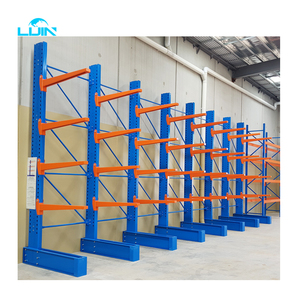
Factory Price Cantilever Rack Heavy Duty Industrial Steel Storage
Engineered for long, heavy profiles, steel bars, and timber. Features high-tensile Q235B/Q355B structural steel columns with adjustable arm pitch for high load safety.
Contact UsExplore engineered heavy-duty cantilever racks, cold-storage material handling structures, custom pipe storage frameworks, and versatile industrial racking engineered to international structural codes.
Engineered for long, heavy profiles, steel bars, and timber. Features high-tensile Q235B/Q355B structural steel columns with adjustable arm pitch for high load safety.
Contact Us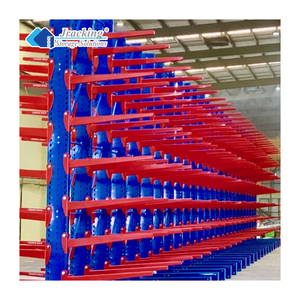
Corrosion-resistant anti-frost coating tailored for sub-zero freezer environments and coastal humidity. Optimized for non-standard pipe bundles and metal tubing.
Contact Us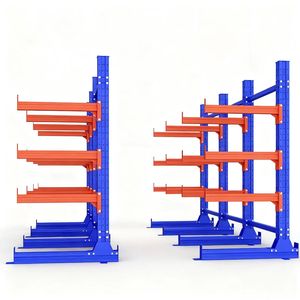
Flexible single and double-sided configurations. Custom height, arm length, and load rating per level exceeding 1,500 kg per arm for oversized raw materials.
Contact Us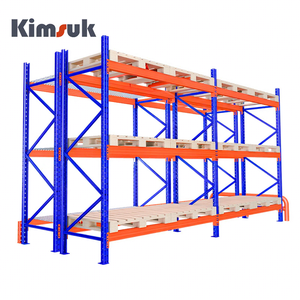
Electrostatic powder-coated finish delivering superior abrasion resistance. Rapid modular assembly designed for industrial manufacturing and distribution centers.
Contact Us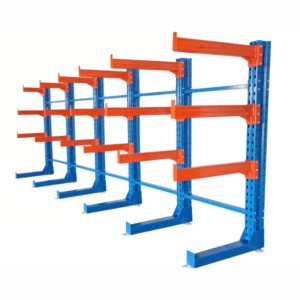
Equipped with pin-locking adjustable arm configurations. Built with hot-dip galvanized option for severe outdoor yards and chemical storage environments.
Contact Us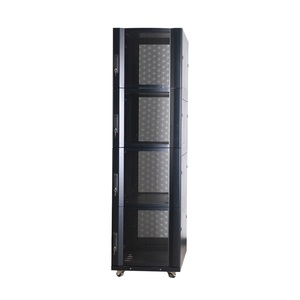
Industrial-grade multi-compartment server enclosure for data centers and warehouse management systems (WMS) control hubs.
Contact Us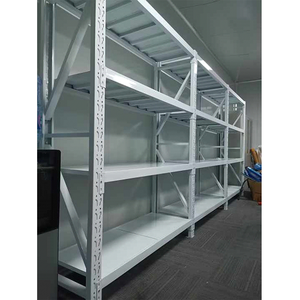
High-density manual picking shelf system designed for hardware accessories, automotive spare parts, and medium-duty box storage.
Contact Us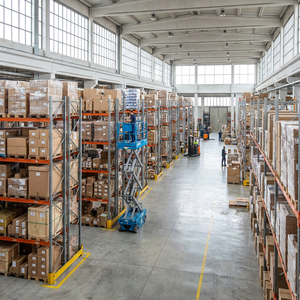
Heavy-duty selective pallet racking designed for high-bay warehouses. Fully integrable with cantilever systems for hybrid warehouse configurations.
Contact UsWhen procuring warehouse infrastructure for non-standard loads—such as steel pipes, aluminum extrusions, lumber, PVC tubing, and heavy structural plates—conventional selective pallet racking fails due to front vertical post obstructions. Cantilever racking eliminates front upright columns, creating an unobstructed linear storage corridor that drastically increases handling efficiency and volumetric space utilization.
Unlike symmetrical pallet frames, cantilever columns endure severe bending moments ($M = F \cdot L$). Premium factories utilize heavy hot-rolled I-beams (H-sections) rather than cold-formed steel to prevent column twisting under full load asymmetrical capacity.
In accordance with ANSI MH16.2 and EN 15629, cantilever arm deflection is capped at $L/180$. Superior designs incorporate a 2-degree upwards incline pitch to offset gravitational sag when fully loaded with multi-ton industrial bundles.
Heavy horizontal and diagonal X-bracing panels lock adjacent vertical columns into a rigid structural block. This absorbs dynamic shock loads from side-loader forklifts and satisfies high seismic zone requirements (e.g., DR R-001, US Zone 4).
Selecting an industrial rack manufacturer requires analyzing structural engineering competencies, steel metallurgy standard adherence, and factory manufacturing capabilities rather than relying solely on surface unit pricing.
| Evaluation Parameter | Tier 1 Global Manufacturers | Standard Market Wholesalers | Procurement Risk Assessment |
|---|---|---|---|
| Steel Grade Certification | Certified Q355B / S355JR structural H-Beam steel with mill certificates. | Uncertified commercial Q235 cold-rolled gauge sheets. | Sub-standard steel leads to premature arm sag and sudden structural failure under dynamic forklift impact. |
| Arm Attachment Mechanism | Pin-locking high-tensile steel bolts with micro-adjustability (50mm / 75mm pitch). | Rigid welded arms or low-grade friction pins without secondary locking rings. | Rigid welded arms eliminate layout flexibility; low-grade pins shear under shock loading during rapid pallet placement. |
| Surface Treatment & Finish | 60-80μm electrostatic powder coating or Hot-Dip Galvanizing (ISO 1461, >85μm). | Basic single-layer spray paint (<30μm thickness). | Thin paint peels within 12 months in coastal or humid cold-storage facilities, triggering deep structural rust. |
| Engineering Analysis | Finite Element Analysis (FEA) 3D stress modeling & custom seismic calculation reports. | Generic load estimation tables based on static weight assumptions. | Unverified static tables ignore horizontal loading, seismic acceleration, and column buckling limits. |
| Quality Assurance Standard | CE certified, ISO 9001:2015, compliant with FEM 10.2.09 & RMI/ANSI MH16.2. | Local non-standard factory inspection without third-party audit reports. | Non-compliance creates legal liability and severe safety audit failures during enterprise facility inspections. |
Industrial warehousing is undergoing a technological transformation driven by land cost escalation, automation integration, and strict safety regulations. Procurement leaders must consider these critical evolution drivers when designing modern racking installations:
Backed by more than two decades of dedicated heavy-duty racking manufacturing experience, our enterprise production ecosystem blends advanced metallurgical engineering with comprehensive logistics support for worldwide enterprise clients.
Every warehouse layout undergoes meticulous structural CAD/3D modeling. Column height, arm length, column spacing, and base plate dimensions are tailored to match your precise forklift aisle clearance and crane sweep radius.
Specially engineered for seismically active tropical regions and aggressive marine environments. We evaluate local soil capacity, concrete slab thickness, anchor embedment, and wind uplift forces for outdoor covered storage yards.
From component grouping and protective sea-worthy bundling to container optimization and complete installation manuals, our turnkey exporting process ensures seamless customs clearance and rapid on-site erection.
Direct technical answers from senior structural engineers to common questions encountered during the purchasing and layout phase of heavy industrial storage racks.
Individual arm capacity ($C_{arm}$) is calculated based on uniformly distributed load (UDL) along the arm length ($L$) considering maximum allowable bending stress ($\sigma_{allow}$) and deflection ($L/180$). Total column load capacity ($C_{col}$) is NOT simply the sum of arm capacities; it is constrained by the column's section modulus, total height, unbraced length, and the severe eccentric bending moment ($M = N_{arms} \cdot C_{arm} \cdot e$) exerted on one or both sides of the upright post.
Roll-formed cantilever racking is manufactured from thin-gauge sheet coil steel cold-bent into C or Omega profiles, best suited for light to medium-duty applications (<500 kg per arm). Hot-rolled structural cantilever racking uses heavy solid steel I-beams and H-sections (Q235B/Q355B). Structural H-beam racking provides extreme impact resistance against forklift strikes and supports heavy industrial loads exceeding 1,500 kg to 3,000 kg per arm.
If column spacing is too wide, flexible long stock—such as thin PVC pipes, plastic extrusions, or thin aluminum bundles—will sag between arms. Permanent material deformation or dangerous slippage occurs if arm centers are miscalculated. As a engineering rule of thumb, material overhang at each end should equal half the distance between column centers ($1/2 S$), with sufficient intermediate arms to limit material sag.
For indoor, climate-controlled facilities, standard electrostatic powder coating (60–80 microns) provides excellent scratch and chemical resistance. However, for outdoor yards exposed to rain, UV radiation, and atmospheric salt, Hot-Dip Galvanizing according to ISO 1461 is mandatory. Hot-dip galvanizing coats both interior and exterior steel surfaces with an 85–120 micron zinc alloy layer, protecting against corrosion for over 25+ years.
Cantilever bases require heavy structural steel base legs bolted or welded to the main upright. High-tensile expansion or chemical wedge anchor bolts (such as M16 to M24 grade 8.8) are drilled into reinforced concrete slab floors. Slab thickness must typically meet or exceed 200mm to 300mm with a minimum compressive strength of 30 MPa ($f'_c$) to resist overturning moments during seismic activity.
Contact our senior structural engineering team today to receive a customized CAD warehouse layout drawing, comprehensive structural load calculations, and competitive direct factory pricing.
Contact Us