Direct-from-Factory Warehouse Pallet Storage Systems
Engineered high-density rack configurations certified under EN 15512, RMI MH16.1, and FEM 10.2.02 standards.
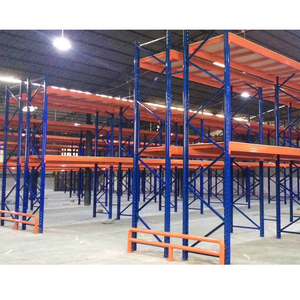
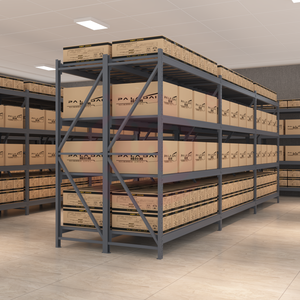
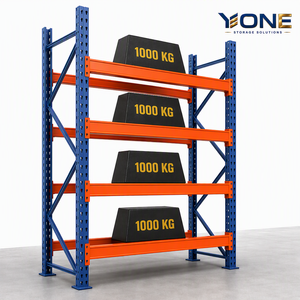
Executive OEM Procurement Guide: Navigating China Wholesale Pallet Storage Suppliers
Technical analysis on structural integrity, steel grades, surface coatings, and seismic design parameters for international logistics hubs.
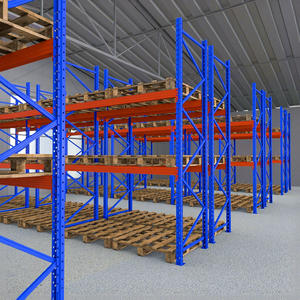
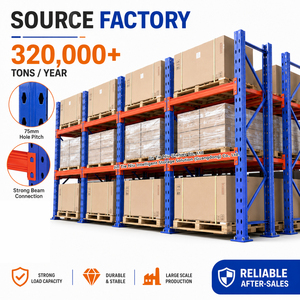
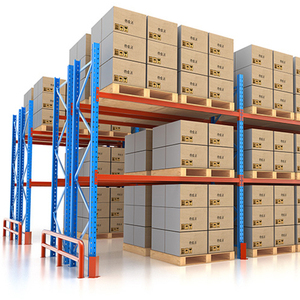
In modern global logistics and supply chain management, optimizing cubic storage density while maintaining strict structural safety standards is the primary operational objective for distribution hubs, 3PL providers, and cold-chain facilities. Sourcing China wholesale warehouse pallet storage racks directly from OEM manufacturers has evolved from a simple cost-reduction tactic into a strategic structural engineering partnership. However, procuring high-capacity pallet racking requires rigorous technical evaluation to ensure structural compliance with localized building codes, seismic acceleration ratings, and strict international standards such as European FEM 10.2.02, RMI/ANSI MH16.1, and EN 15512.
Metallurgical Standards & Material Selection (Q235B vs. Q355B Structural Steel)
The foundation of any industrial pallet racking system is the metallurgical composition of its steel coils. Leading Chinese storage factories utilize continuous cold-rolling mills to manufacture upright columns and interlocking box beams from prime steel certified by major state mills (such as Baosteel, Shougang, and Ansteel). Understanding material grades is essential for procurement directors:
- Q235B Structural Carbon Steel: Standard industry grade featuring a nominal yield strength ($f_y$) of $235\text{ MPa}$ and ultimate tensile strength ($f_u$) ranging between $370\text{--}500\text{ MPa}$. Highly reliable for standard selective racking systems with beam loads up to $2,500\text{ kg per level}$.
- Q355B High-Yield Low-Alloy Steel: Advanced grade offering a minimal yield strength of $355\text{ MPa}$. Used for ultra-heavy-duty selective bays, high-bay automated warehouses (AS/RS), narrow-aisle (VNA) systems, and earthquake-prone geographic zones. Q355B steel yields up to a 30% reduction in structural dead weight while increasing ultimate frame buckling resistance.
Cold-Rolled Upright Profile Geometry & Buckling Strength Calculations
Upright frame design relies on precise geometrical cold-forming. High-performance upright columns feature complex 11-fold or 13-fold profile cross-sections with continuous teardrop or omega ($\Omega$) punching patterns. This geometry maximizes the moment of inertia ($I_x, I_y$) and radius of gyration ($r$), effectively mitigating global torsional-flexural buckling under concentrated axial loads.
Seismic-Aware Engineering
Structural dynamic modal analysis matching localized seismic hazard maps (including Hispaniola/Caribbean R-001 regulations and US IBC standards). Engineered baseplates distribute dynamic base shear forces into concrete slabs.
Corrosion Resilience & Powder Coating
Electrostatic thermocuring epoxy-polyester powder coating (80–120 microns) or Hot-Dip Galvanizing according to ISO 1461. Essential for humid coastal zones, cold storage freezers, and salt-spray heavy environments.
Structural Rigidity & Beam Locks
Heavy-duty 3-claw and 4-claw cold-stamped connectors fitted with automatic spring-loaded safety locks, completely preventing accidental beam dislodgement under violent forklift operational impacts.
Industrial Pallet Rack Technical Specification & Application Matrix
Comparative engineering parameters for system selection across diverse warehouse inventory profiles.
| Racking System Type | Cubic Volume Utilization | Pallet Access (Selectivity) | Handling Equipment Requirement | Typical Load Capacity / Level | Best Industry Fit |
|---|---|---|---|---|---|
| Selective Pallet Racking | 40% – 50% | 100% Direct Access | Standard Counterbalance / Reach Truck | 1,000 kg – 4,500 kg | FMCG, 3PL Logistics, E-commerce Fulfillment |
| Double Deep Racking | 55% – 65% | 50% Immediate Access | Deep-Reach Pantograph Truck | 1,500 kg – 3,000 kg | Beverage Bottlers, Bulk Batch Processing |
| Drive-In / Drive-Through | 65% – 75% | LIFO / FIFO Lane Access | Standard Counterbalance Truck | 1,000 kg – 2,000 kg | Cold Storage Freezers, Dairy, Seasonal Produce |
| Radio Shuttle Racking | 75% – 85% | Automated Lane Access (FIFO/LIFO) | Standard Forklift + Automated Shuttle | 1,500 kg – 2,000 kg per pallet | Food Manufacturing, Cold Chain Hubs, Pharma |
| Automated AS/RS High-Bay | 85% – 95% | 100% Automated WMS Control | Automated Stacker Crane / RGV | 500 kg – 3,000 kg per pallet | Automotive Manufacturing, High-Density Distribution |
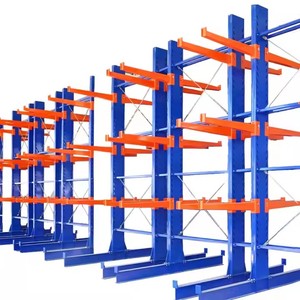
| Heavy-Duty Cantilever Racking | Variable (Long Loads) | 100% Direct Frontal Access | Side Loader / Counterbalance Truck | 500 kg – 5,000 kg per arm | Steel Pipes, Timber, PVC Tubing, Rebar Yards |
Future Procurement Trends in China Wholesale Warehouse Storage (2025–2030)
Key technological innovations re-shaping global warehouse rack manufacturing and supply chain sourcing strategies.
As global supply chains shift toward hyper-automation, environmental sustainability, and rapid order execution, the wholesale manufacturing landscape for pallet storage in China is undergoing a profound technological transformation. Procurement managers must align their long-term infrastructure investments with these emerging industry paradigms:
1. Transition to Automated & Semi-Automated Shuttle Systems
Traditional manual forklifts operating in narrow aisles present higher labor overheads and continuous collision risks to vertical frame columns. Wholesale procurement is rapidly transitioning toward semi-automated Radio Shuttle Racking Systems and fully integrated AS/RS (Automated Storage and Retrieval Systems). Chinese factories now manufacture rack structures embedded with laser-guided sensor channels, precision rack alignment tolerances ($\pm 1.5\text{mm}$ over $15\text{m}$ height), and integrated busbar electric power distribution.
2. Eco-Friendly Powder Coatings & Zero-VOC Manufacturing
In accordance with global ESG (Environmental, Social, and Governance) compliance mandates, tier-1 Chinese racking factories are replacing older solvent-borne paint systems with advanced Zero-VOC electrostatic powder coating lines and heavy-metal-free zirconium pretreatment processes. Additionally, energy-efficient automated laser cutting and robotic arc welding cells reduce carbon emissions during raw steel fabrication, enabling international buyers to meet Scope 3 sustainability targets.
3. Smart Pick-to-Light & IoT-Enabled Component Racks
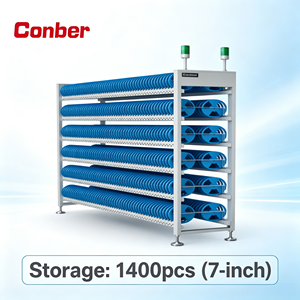
Electronics manufacturing, SMT reel management, and high-density micro-fulfillment hubs demand real-time inventory tracking integrated directly into the physical racking structure. Innovation in Smart Pick-to-Light SMT Reel Racks featuring multi-color dynamic LED strips and motor-driven core positioning enables warehouse management systems (WMS) to guide human operators visually. This eliminates manual searching time, dropping picking error rates to under 0.01% in high-mix, low-volume assembly lines.
4. High-Yield Thin-Wall Steel Profiles for Modular Pallet Racking
Through advanced finite element analysis (FEA) software, OEM engineering teams are designing complex multi-ribbed upright cross-sections using thinner gauge, ultra-high-strength steel. This innovation maintains exact nominal frame loading capacities while reducing raw material weight by 12–18%. This weight optimization directly impacts oceanic container shipping economics, allowing international buyers to maximize payload limits per 40ft High Cube container.
Evolution of China's Storage Racking Supply Chain & Global OEM Advantages
Why leading global distribution hubs rely on direct Chinese manufacturing partnerships for large-scale logistics infrastructure.
End-to-End Vertical Integration
Direct access to raw steel coil slitting, cold roll-forming, automatic punch pressing, robotic welding, and automated powder coating under one factory roof ensures rigid quality assurance and lower lead times.
Custom OEM/ODM Engineering
Tailor-made structural engineering for non-standard pallet shapes (including US GMA 48"x40", Euro 1200x800mm, and custom industrial metal skids) and specific forklift aisle turning radius requirements.
Streamlined Global Export Packaging
Components are bundled with protective steel banding, wooden dunnage, plastic shrink wrapping, and detailed bay-labeled identification tags optimized for 40ft HQ container loading and rapid site offloading.
Frequently Asked B2B Procurement Questions (FAQ)
Technical and logistical insights for buyers sourcing warehouse pallet racking from Chinese factories.
Q: What core technical information is required to receive an accurate structural racking quote?
To compute exact structural beam profiles and frame gauge requirements, your OEM factory requires: (1) Loaded pallet dimensions (Height x Width x Depth including cargo overhang); (2) Maximum dynamic weight per pallet position; (3) Clear building height beneath roof trusses or fire sprinkler pipes; (4) Concrete floor slab thickness and compressive strength ($f'_c$ rating); and (5) Specific forklift model turning radius and maximum lift height.
Q: How do Chinese rack factories ensure compliance with local seismic regulations (e.g., US RMI, EU EN 15512, Dominican R-001)?
Top-tier wholesale manufacturers employ in-house structural engineers equipped with specialized FEA software (such as ANSYS and SAP2000). They calculate seismic response spectrums, dynamic ground acceleration coefficients ($S_s, S_1$), and base anchor shear stresses, providing localized calculation packages for third-party engineering sign-off.
Q: What is the difference between Hot-Dip Galvanized and Powder Coated finishes in humid environments?
Powder coating offers excellent indoor wear resistance, high visibility color coding, and mechanical scratch protection in climate-controlled distribution centers. Hot-Dip Galvanizing (HDG) involves immersing fabricated steel components into molten zinc to produce an alloy layer (minimum 65–85 microns thick). HDG provides permanent cathodic protection against severe atmospheric corrosion, essential for outdoor open-sided sheds, chemical processing plants, coastal marine regions, and sub-zero cold storage facilities with frequent condensation.
Q: How are shipping containers packed to prevent damage during long-distance ocean transport?
Upright frames are stacked flat with timber spacers between rows, while box beams are nested in heavy-duty bundles protected by cardboard edge guards, plastic strapping, and heavy plastic stretch film. Small hardware accessories (safety pins, expansion anchor bolts, baseplates, frame levelling shims) are packed into reinforced wooden crates or heavy-duty triple-wall corrugated export boxes labeled per bay installation sequence.
Q: What is the typical factory production lead time for bulk wholesale racking orders?
Standard manufacturing lead time for standard selective pallet racking orders (5 to 15 container loads) is typically 15 to 25 business days following final engineering CAD drawing sign-off and raw steel coil slitting. Complex automated systems involving Radio Shuttles or AS/RS stacker cranes require 30 to 45 days for integrated testing and electronics assembly.