Export-Grade Industrial Pallet Racking Systems
Engineered to international FEM 10.2.02 & ANSI MH16.1 standards for optimal load capacity and operational safety.
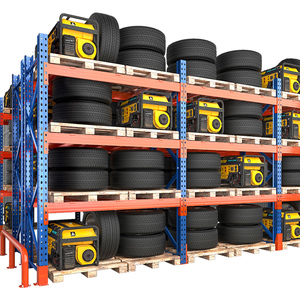
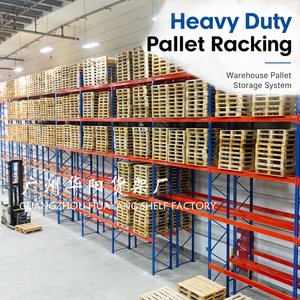
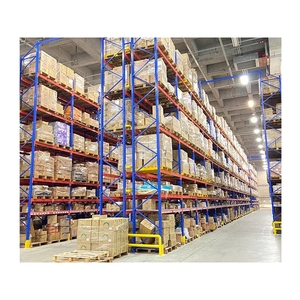
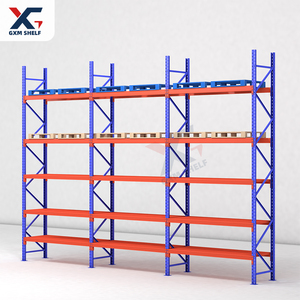
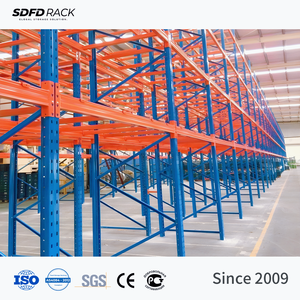
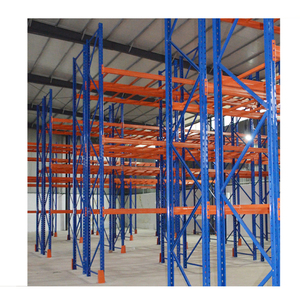
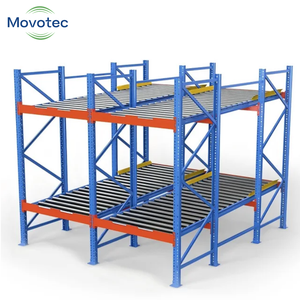
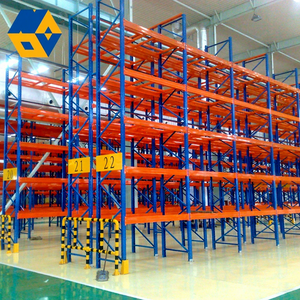
1. Engineering Mechanics of Push Back Racking Systems
Push back racking systems represent one of the most mechanically elegant solutions within modern high-density material handling technology. Operating on a Last-In, First-Out (LIFO) inventory cycle, push back racking utilizes a series of nested, inclined carts that glide along structural steel rails attached to heavy-duty upright frames. As a forklift loads a new unit load into a storage lane, it gently pushes the preceding pallet back to accommodate the incoming unit, exposing the next nested cart underneath.
When retrieving inventory, gravity drives the process: as the front pallet is picked from the picking face, the remaining rear pallets automatically roll forward to the front position at a controlled velocity. This eliminates the necessity for forklifts to enter structural storage aisles, drastically reducing cycle times and eliminating structural frame collisions commonly experienced in traditional drive-in racking layouts.
Structural Kinetics & Slope Calibration
The operational safety and longevity of a heavy-duty push back rack system depend primarily on precision structural engineering. Leading Chinese exporters engineer cart track inclinations within a strict pitch gradient of 1.5% to 2.2% depending on unit load mass and ambient environmental conditions (e.g., ambient warehouse vs. sub-zero cold storage facilities). Precise alignment prevents dynamic impact stress while ensuring consistent gravity feed performance.
Telescoping Nested Carts
Fabricated from heavy-gauge structural channel steel, nested carts stack cleanly atop one another, minimizing lost vertical space in each storage level while providing maximum beam clearance.
Low-Friction Heavy Bearings
Outfitted with sealed, precision-ground industrial steel bearings to handle dynamic shock loads up to 1,500 kg per pallet cart while maintaining smooth motion cycles.
Safety End-Stops & Retainers
Integrated mechanical safety stops prevent cart over-travel at the picking face, safeguarding warehouse operators and protecting inventory against unintended dynamic dislodgement.
2. Global Procurement Trends in Push Back Racking (2025–2030)
As global supply chains navigate volatile real estate prices, soaring cold-chain energy expenses, and severe warehouse footprint constraints, international procurement directors are shifting toward high-density modular storage architectures. Industry intelligence points toward three primary macroeconomic trends defining international demand for push back rack exports from China:
A. Rapid Expansion of Cold Chain & Refrigerated Logistics
Cold storage operating costs are heavily tied to cubic refrigeration efficiency. Traditional selective rack layouts leave up to 60% of vertical and lateral chilled space unutilized. Push back racking systems allow 2 to 6 deep pallet storage, dramatically compressing aisle footprints. Exporters in China are seeing surging global orders for specialized low-temperature steel formulations and synthetic low-temperature lubricants capable of operating flawlessly in temperature environments as low as -30°C.
B. Hybrid System Integration (Automated Shuttle & Push Back Combo)
Logistics engineering is increasingly combining mechanical push back lanes with automated radio shuttle systems and AGVs (Automotive Guided Vehicles). By utilizing push back lanes as buffer zones adjacent to high-speed sorters, facility designers achieve high-density staging without over-investing in complex electronic automation across 100% of the facility layout.
C. Stringent Compliance with Seismic & Environmental Standards
International buyers across North America, Latin America, Europe, and Asia-Pacific are requiring structural steel certification verifying compliance with RMI (Rack Manufacturers Institute ANSI MH16.1), FEM 10.2.02, and Eurocode 3 standards. Exporters supplying high-grade Q355B cold-rolled steel structures certified for seismic acceleration zones (e.g., US West Coast, Hispaniola/Caribbean, Japan, Chile) are securing long-term global procurement contracts.
| Storage System Type | Selectivity | Storage Density | Footprint Efficiency | Forklift Entry Required | Primary Application |
|---|---|---|---|---|---|
| Push Back Racking | Medium (LIFO per lane) | Very High (up to 75%) | Excellent | No (Stays in aisle) | FMCG, Cold Storage, Buffer Staging |
| Selective Pallet Rack | 100% Immediate | Low (approx. 40%) | Baseline | No | High-SKU Distribution Centers |
| Drive-In Racking | Low (LIFO per bay) | High (up to 65%) | Good | Yes (Enters structure) | Homogeneous Batch Storage |
| Gravity Pallet Flow | Medium (FIFO) | Extremely High | Maximum | No | Perishable Goods, High Turnover |
3. Strategic Advantages of Partnering with Leading Chinese Exporters
China has established itself as the global manufacturing hub for structural steel warehouse rack systems. However, selecting a top-tier exporter requires reviewing technical capabilities, raw material sourcing, automated fabrication precision, and quality management protocols. Below is a detailed breakdown of corporate engineering capabilities demonstrated by premier Chinese manufacturers:
Factory Direct Manufacturing Rigor
Leveraging fully automated continuous cold-roll forming production lines, robotic laser cutting, and automated electrostatic powder coating lines to deliver dimensional tolerances within ±0.5mm across massive rack production runs.
Inquire Now
Certified High-Yield Steel
Sourced directly from top tier state-owned steel mills (BaoSteel, AnSteel), using certified Q355B/Q235B structural grade steel with verified yield and tensile stress test certificates included with every shipment.
3D FEA Structural Modeling
In-house structural engineering teams utilize finite element analysis (FEA) software to simulate seismic dynamics, buckling limits, and dynamic push back cart forces before cutting raw steel.
Advanced Surface Finishes
Pre-treated through 5-stage chemical washing, followed by thermosetting epoxy-polyester electrostatic powder coating (60-80 microns thickness) or heavy hot-dip galvanizing for marine & coastal environments.
4. Comprehensive Technical & Procurement FAQ
Direct technical answers to common questions raised by logistics directors, structural consultants, and global rack importers when evaluating push back system engineering.
Ready to Optimize Your Warehouse Cubic Footprint?
Connect directly with senior structural engineers to receive a customized 3D layout drawing, dynamic load calculation, and factory-direct quotation within 24 hours.
Inquire Now