Industrial Push Back Racking & High-Density Warehousing Engineering Manual
An authoritative technical analysis of dynamic cart-on-rail storage mechanics, structural steel integrity, seismic resilience, and global procurement trends for enterprise warehouse operations.
In modern industrial logistics, optimizing volumetric warehouse space while maintaining structural safety and high throughput velocity is paramount. As a premier global CE certified push racks exporter, our engineering division designs specialized high-density pallet storage systems that resolve the fundamental friction between storage density and operational accessibility. Push back racking systems leverage nested dynamic carts traveling on inclined structural steel rails, operating on a Last-In, First-Out (LIFO) inventory matrix that converts redundant aisle space into active revenue-generating storage positions.
By utilizing cold-rolled high-tensile steel structural profiles (Q235B and Q355B grades) engineered under rigid European standards (EN 15512, FEM 10.2.02) and American RMI/ANSI MH16.1 specifications, our enterprise storage solutions deliver structural safety margins exceeding 1.5x design load capacity. Whether deployed in ambient distribution facilities, high-humidity manufacturing plants, or sub-zero cold storage operations, engineered push back systems maximize pallet positions by up to 75% compared to conventional selective pallet racking setups.
Certified Industrial Racking Systems Portfolio
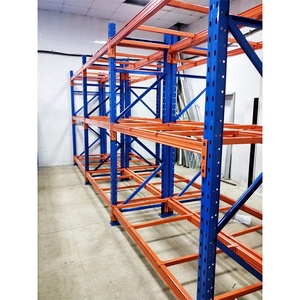
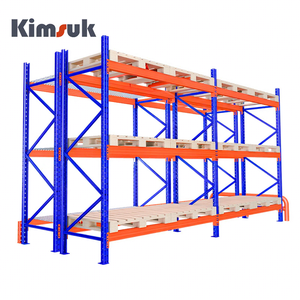
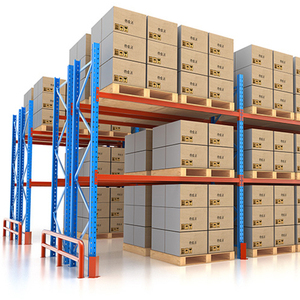
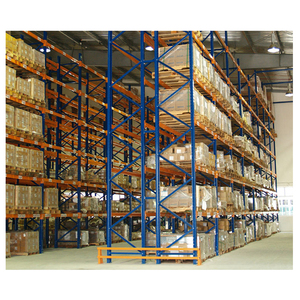
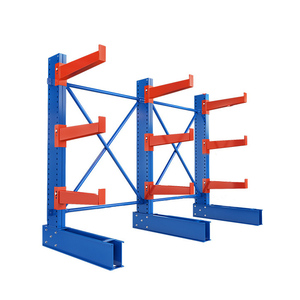
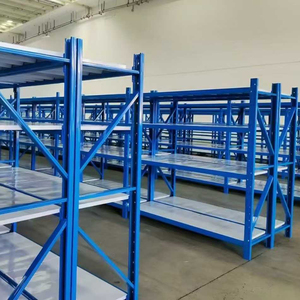
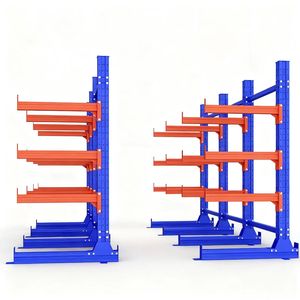
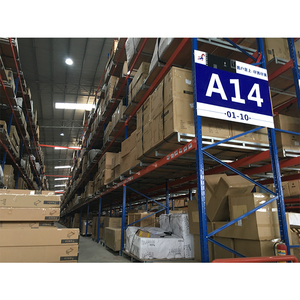
Explore our complete range of CE-certified pallet storage racks, heavy-duty cantilever structures, and modular industrial shelving engineered for global export.
Technical Architecture & Kinematic Principles of Push Back Racking
A deep dive into structural steel profiles, nested cart geometry, anti-derailment flange mechanisms, and dynamic gravity slope engineering.
Nested Cart System Geometry
Our push back systems engineer nesting steel carts riding on inclined structural channels. Each cart operates at progressively lower height profiles, allowing 2, 3, 4, 5, or 6 deep pallet configurations without catching or binding during push-in maneuvers.
Precision Gravity Slope Calculation
Constructed with a precise 1.5% to 2.2% pitch gradient, the dynamic inclined track uses controlled gravity flow to bring rear pallets forward automatically when the front pallet is retrieved by a standard forklift, eliminating deep aisle entry requirements.
Anti-Derailment & Safety Locks
Every cart features heavy-duty steel sealed bearings and integrated anti-lift flanges. This guarantees that unaligned forklift loading or unbalanced pallet weight distributions cannot dislodge cart wheels from the primary guide rails.
Technical Comparison: Industrial Storage Density & Throughput Metrics
| Racking Architecture | Storage Density Gain | Accessibility (SKU Ratio) | Forklift Operation Speed | Optimal Inventory Rotation | CE / FEM Compliance |
|---|---|---|---|---|---|
| Push Back Racking (Nested Carts) | +65% to +75% | 1 SKU per lane (LIFO) | High (No entry into rack required) | Medium to High Turnover (LIFO) | FEM 10.2.02 / EN 15512 |
| Selective Pallet Racking | Baseline (30-40% floor utilization) | 100% Direct Access | Standard | Any Rotation (FIFO / LIFO) | EN 15512 / RMI MH16.1 |
| Drive-In Racking System | +70% to +80% | 1 SKU per deep tunnel | Slow (Forklift enters structure) | Bulk Seasonal / Batched LIFO | EN 15512 / FEM 10.2.07 |
| Radio Shuttle Automated Racking | +85% to +90% | Software controlled lane access | Very High (Automated shuttle) | Flexible (Software FIFO / LIFO) | CE Machinery Directive / EN 15512 |
Enterprise Manufacturing & Exporter Advantages
Why leading global logistics hubs, 3PL providers, and cold storage operators partner with our factory for custom structural racking export.
Certified Structural Engineering & FEA Validation
Our structural engineering department performs Finite Element Analysis (FEA) modeling on every bespoke push back rack layout. We model live dynamic loading, forklift impact vectors, and seismic vibration spectrums to verify structural deflection limits strictly comply with EN 15512 standards.
Advanced Anti-Corrosion Finishing Technology
Operating dedicated automatic continuous electrostatic powder-coating lines, our component finishes undergo multi-stage alkaline washing, iron-phosphate pretreatment, and thermosetting epoxy-polyester curing. For harsh coastal, high-humidity, or chemical storage zones, hot-dip galvanizing options meeting ISO 1461 are provided.
Global Export Containerization & Marking
As an international exporter across 85+ countries, component bundles are securely steel-strapped, wrapped in heavy-duty moisture barrier films, and organized on custom steel cradles. Every upright, beam, cart, and rail component carries color-coded job stickers corresponding to detailed site assembly blueprints.
Seismic-Aware Anchor Engineering
In seismically volatile geological zones (e.g., Caribbean region, Latin America, Pacific Rim), baseplates, anchor wedge bolts, and frame diagonal bracing schedules are custom calculated to withstand ground acceleration forces up to R-001 regional earthquake regulations.
Future Procurement Trends in Industrial Push Racks & Storage Systems
Strategic market analysis on automated hybrid storage systems, cold chain expansion, and sustainable steel sourcing strategies for enterprise procurement leaders.
1. Convergence of Push Back Dynamics with Automated Guided Vehicles (AGVs)
The global industrial logistics sector is undergoing a rapid transition toward semi-automated material handling. Traditional push back racking systems are increasingly being engineered with laser-aligned front stops and optical position reflectors. This allows high-capacity Automated Guided Vehicles (AGVs) and autonomous reach trucks to interface directly with nested cart lanes, executing high-density LIFO staging with millimeter accuracy and zero driver error risk.
2. Exponential Growth in Sub-Zero Cold Chain Storage Optimization
With global cold chain infrastructure expanding to meet frozen food and biopharmaceutical demands, energy costs per cubic meter of refrigerated volume have escalated dramatically. Enterprise buyers are shifting away from energy-inefficient selective racking toward 4-deep and 6-deep push back systems. Push back racking maintains high selectivity per level while reducing the total cubic space that requires active refrigeration, lowering HVAC energy expenditure by up to 35% annually.
3. Modular Reconfigurability and High-Yield Structural Steel Sourcing
Modern enterprise procurement teams demand long-term asset flexibility. Future-proof push back rack designs feature universal beam connector hooks, teardrop or keyhole structural slotting, and boltless rail drop-in assemblies. This enables facility operators to convert 3-deep lanes into 2-deep or 4-deep configurations as inventory SKU profiles shift over multi-year business cycles.
Product Development Trends & Structural Engineering Innovations
Key technological breakthroughs in cart mechanical design, kinetic dampening, and high-tensile material selection.
Low-Profile Nesting Cart Engineering
Next-generation push back systems utilize ultra-thin, high-yield alloy cart frames that reduce total nesting stack height by up to 40%. This ultra-compact vertical clearance unlocks up to 6 to 10 inches of usable storage clearance per bay, enabling additional beam levels under low ceiling structures.
Hydraulic Kinetic Velocity Dampeners
To prevent heavy pallets (e.g., 1,500kg+) from accelerating too fast during front pallet extraction, self-contained centrifugal velocity controllers and magnetic hysteresis dampening wheels are integrated into the rail assembly, maintaining smooth, safe descent speeds.
High-Strength Q355B Steel Profiles
Upgrading structural upright frames from standard Q235B mild steel to micro-alloyed Q355B structural steel delivers a 35% increase in yield strength. This engineering upgrade allows slimmer structural section profiles without sacrificing heavy-duty structural load ratings.
Frequently Asked Questions (FAQ) for Global Racking Procurement
Expert engineering answers regarding structural load calculations, safety certifications, delivery logistics, and site installation.
How do CE Certification and European Standard EN 15512 protect enterprise buyers?
CE Certification combined with EN 15512 design compliance certifies that structural steel racking systems undergo rigorous static design calculations, eccentric beam connection tests, and dynamic frame buckling analyses. Working with a CE certified push racks exporter guarantees that safety factors, material tolerances, and structural steel mill test certificates (MTCs) meet international legal liability standards.
What is the maximum depth and weight capacity allowable for push back rack systems?
Our standard engineered push back racking systems accommodate configurations from 2 to 6 pallets deep per lane. Individual cart loading capacities range from 500 kg (1,100 lbs) up to 1,500 kg (3,300 lbs) per pallet position. Custom structural steel profiles can be engineered for specialized heavy-die or coil storage applications up to 2,500 kg per position.
Can push back racking systems operate reliably inside cold storage freezers?
Yes. For low-temperature environments (down to -30°C / -22°F), we utilize specialized cold-grade structural steels that resist low-temperature brittle fracture. Cart wheels are fitted with stainless steel precision bearings packed with synthetic low-temperature food-grade grease to prevent ice seizure or drag.
What type of forklift equipment is required to operate a push back rack lane?
Push back racks operate seamlessly with standard counterbalanced forklifts, reach trucks, or deep-reach trucks. Special forklift mast attachments are not required. The operator simply lifts the incoming pallet slightly above the cart height, pushes the existing pallets back with the new pallet, and sets it down onto the newly exposed cart.
How does your engineering team support international delivery and site assembly?
Every export project includes a comprehensive engineering package containing 2D CAD layout drawings, 3D structural connection schematics, component part material lists, and step-by-step installation manuals. Upon request, we deploy bilingual installation supervisors or certified site assembly teams directly to your facility.
Transform Your Warehouse Storage Density Today
Consult with our senior structural engineers to receive a free CAD facility layout design, volumetric storage calculation, and factory-direct export quotation within 24 hours.