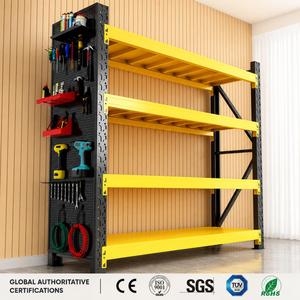
Industrial Product Portfolio
CE Certified Heavy-Duty Warehouse Storage Solutions
Engineered for high-density palletized logistics, optimal volume utilization, and full seismic structural safety compliance across international industrial sectors.
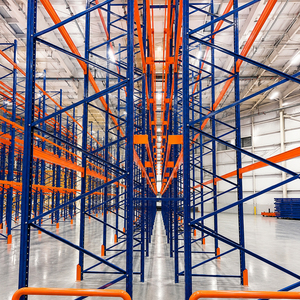
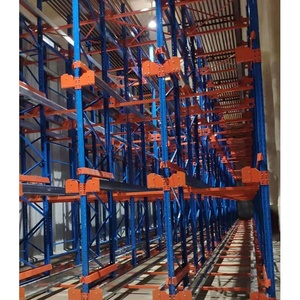
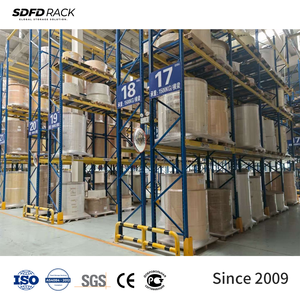
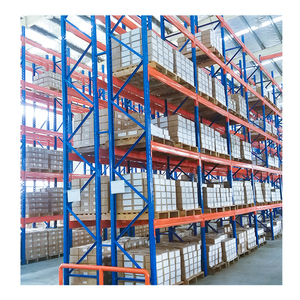
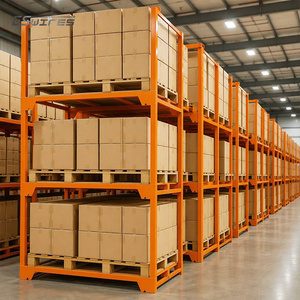
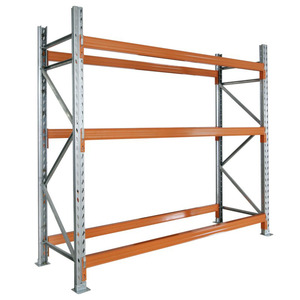
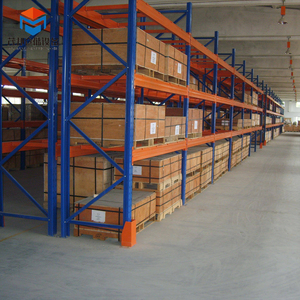
Architectural Engineering & Mechanical Dynamics of Push Back Racking
Push back racking systems represent a pinnacle of modern high-density accumulated storage engineering. Utilizing a dynamic Last-In, First-Out (LIFO) operational logic, push back racking allows warehouse operators to store pallets 2 to 6 deep while retaining immediate accessibility to distinct SKU lanes along the front picking aisle. Unlike drive-in racking systems—where forklifts must physically navigate inside structural bays—push back racking operates entirely from the aisle, dramatically reducing material handling cycle times and eliminating structural frame collision risks.
The fundamental mechanism of a CE-certified push back racking system relies on a series of nested, telescoping carts that glide smoothly along inclined structural steel rails pitch-engineered at a 1.5° to 2.0° gradient. When a forklift loads the first pallet onto the lane, it rests directly on the top nested cart. When the second pallet is loaded, the forklift gently pushes the first pallet backward, exposing the underlying second cart. This process is repeated for up to six pallet depths. During retrieval, gravity assists the seamless movement: as the front pallet is picked, the remaining rear pallets automatically slide forward to the front aisle face at a controlled kinetic speed, ready for immediate picking.
Information Gain Insight: Structural safety in push back engineering relies heavily on dynamic cart synchronization and anti-lift safety stops. Premium certified systems incorporate cold-rolled Q355B structural steel channels, high-precision sealed bearings, and integrated rubber bumpers to mitigate impact shock during heavy-velocity pallet descent.
From an industrial engineering perspective, the structural integrity of a push back racking installation is dictated by strict compliance standards such as EN 15512 (European standard for steel static storage systems) and FEM 10.2.02 (Federation Europeenne de la Manutention). Under these directives, every upright frame, support beam, and telescoping rail assembly undergoes rigorous finite element analysis (FEA) to ensure dynamic load balancing under seismic accelerations and uneven floor slab settlement.
High Yield Q355B Steel
Manufactured using premium cold-rolled structural steel with yield strength up to 355 MPa, providing superior flexural rigidity under heavy pallet concentrations.
CE Structural Compliance
Full conformance with EN 15512, EN 15620, and RMI ANSI MH16.1 specifications, verified by rigorous third-party load testing and structural audits.
Low-Profile Cart Engineering
Optimized low-profile nested cart design maximizes vertical clear height utilization, allowing extra beam levels within standardized building heights.
Comparative Engineering Matrix: Push Back vs Alternative High-Density Racking
When enterprise procurement teams evaluate warehouse storage investments, selecting the optimal structural layout requires balancing floor space efficiency (density) with operational throughput (selectivity). Below is an authoritative technical comparison highlighting why push back racking outperforms traditional configurations in fast-moving LIFO logistics environment:
| Storage System Type | Floor Density Utilization | SKU Selectivity Ratio | Forklift Operating Speed | Structural Damage Risk | Cold Storage Suitability |
|---|---|---|---|---|---|
| Push Back Racking (2-6 Deep) | 75% - 85% | Medium-High (Per Lane) | Fast (Aisle Only) | Very Low | Exceptional (-30°C Rated) |
| Selective Pallet Racking | 35% - 45% | 100% (Every Pallet) | Very Fast | Low | Moderate (High Footprint Cost) |
| Drive-In / Drive-Through Rack | 80% - 90% | Low (Per Block) | Slow (Enters Bays) | High (Upright Impacts) | High |
| Radio Shuttle Racking | 85% - 95% | Medium (Automated) | Fast (Automation-assisted) | Extremely Low | High (Battery Limited) |
| Pallet Flow (Gravity FIFO) | 80% - 90% | Medium (FIFO Flow) | Fast (Dedicated Aisles) | Low | High |
As illustrated in the engineering matrix, push back racking achieves up to 85% volumetric utilization while completely mitigating the structural vulnerability associated with drive-in racking. Because forklifts do not enter the rack structure, forklift collision frequency with upright frames is reduced by over 90%, yielding lower annual maintenance expenditures and significantly enhancing warehouse structural safety.
Future Procurement & Technological Trends in Industrial Storage (2025–2030)
The global warehousing and third-party logistics (3PL) sector is undergoing a structural transition toward sustainable, high-density, and smart-compatible infrastructure. As industrial real estate acquisition costs rise globally, warehouse operations managers are moving away from traditional horizontal floor expansions toward intelligent vertical volume maximization. Procurement decisions for racking equipment are now heavily influenced by four key technological trends:
1. Cold Chain Logistics Expansion & Thermal Energy Efficiency
With global cold storage logistics expanding rapidly in food processing, pharmaceutical distribution, and floral exports, energy conservation within refrigerated and blast-freezer facilities is paramount. Cooling an empty cubic meter of air represents a ongoing operational loss. Push back racking systems minimize wasted aisle space inside cold rooms, operating effectively at temperatures down to -30°C with custom low-temperature bearing lubricants and hot-dip galvanized finishes. This maximizes thermal density and reduces refrigeration power consumption per pallet position by up to 30%.
2. Hybrid Integration with Warehouse Management Systems (WMS) & Sensors
Modern CE-certified push back racking is increasingly manufactured to support IoT sensor arrays and automated inventory scanning. Integrated micro-sensors mounted along push back rail stops transmit real-time pallet occupation data to enterprise WMS software. This enables automated replenishment alerts, precise LIFO aging management, and accurate dynamic weight load monitoring across multi-tier racking structures.
3. Sustainable Steel Procurement & Green Galvanization
Global supply chain compliance guidelines now mandate lower embedded carbon footprints across warehouse construction materials. Progressive racking manufacturers utilize eco-friendly electrostatic powder coatings free of volatile organic compounds (VOCs) and source high-grade structural steel from electric arc furnace (EAF) mills. Hot-dip galvanization conforming to ISO 1461 ensures multi-decade structural lifespans without requiring chemical recoating or early structural replacement.
Enterprise Manufacturing Supremacy & Global Export Capabilities
With over two decades of dedicated industrial manufacturing expertise, our manufacturing facilities serve as a benchmark for high-precision warehouse storage production. Combining advanced automated robotic welding lines, CNC cold-roll forming mills, and automated continuous powder coating chambers, we deliver structural racking solutions engineered to withstand the world's most demanding logistics environments.
Rapid Design & CAD Layouts
Our dedicated engineering team provides turnkey CAD layouts, structural calculations, and 3D BIM models within 24 to 48 hours for global tender compliance.
Seismic Engineering & Certification
Every structural system is tailored to local seismic zones (such as Dominican Republic R-001, US IBC, or European Eurocode 8 standards) with reinforced base plates and anchors.
Turnkey Export & Logistics
We manage direct sea freight logistics, container loading optimization, bay-by-bay component labeling, and full installation supervision globally.
Frequently Asked Procurement & Engineering Questions (FAQ)
Explore detailed technical answers addressing common structural, operational, and purchasing inquiries regarding CE Certified Push Back Racking Systems:
What structural standards confirm your push back racking's CE certification?
Our CE certified push back racking systems strictly conform to European Norm standards EN 15512 (Steel static storage systems - Adjustable pallet racking systems - Principles for structural design) and EN 15620 (Tolerances, deformations and clearances). Additionally, systems comply with FEM 10.2.02 and RMI/ANSI MH16.1 standards. Complete factory production control certificates (FPC) and material test reports (MTR) are provided with every export shipment.
What pallet formats and load weights can your push back systems accommodate?
We design custom cart dimensions engineered for all global standard pallet sizes, including GMA 48" x 40", Euro Pallets (1200 x 800 mm / 1200 x 1000 mm), and specialized industrial wire pallets. Individual cart weight capacities range from 500 kg to 1,500 kg per pallet position (1,100 lbs to 3,300 lbs). Heavy-duty structural options are available for specialized industrial loads up to 2,000 kg per cart level.
How does push back racking prevent pallets from descending too quickly or jamming?
Safety and speed control are engineered into the track incline angle and precision wheel assemblies. Tracks are precision-set at a specific slope (typically 1.5% to 2%). Heavy-duty stainless steel ball bearing wheels ensure frictionless movement pushing back, while integrated mechanical speed controllers (friction brakes) can be embedded along deep lanes (4 to 6 deep) to ensure smooth, controlled kinetic descent during retrieval.
Can push back racking be installed inside cold storage facilities?
Yes. Push back racking is exceptionally well-suited for cold rooms and blast freezers. Components destined for sub-zero operating environments (-30°C) utilize specialized low-temperature carbon steel alloys, synthetic cold-rated bearing grease that resists freezing, and corrosion-resistant powder coating or hot-dip galvanizing to prevent rust caused by condensation.
What forklift types are required to operate a push back racking system?
Standard counterbalanced forklifts and reach trucks are fully compatible with push back racking. No specialized long-reach forks or narrow-aisle guided trucks are required, provided the forklift has sufficient pushing force and lifting capacity to match the combined weight of the nested pallets during loading.
What initial design information is required to receive a formal structural quote and CAD drawing?
To prepare an accurate structural proposal, our engineering team requires: (1) Loaded pallet dimensions (Width x Depth x Height including cargo overhang), (2) Maximum weight per pallet, (3) Desired pallet storage depth (e.g., 2-deep, 4-deep, 6-deep), (4) Available warehouse clear ceiling height and concrete slab specifications, and (5) Operating ambient temperature ranges.
Transform Your Warehouse Storage Density Today
Consult with our Senior Structural Engineers to receive custom CAD layouts, CE compliance documentation, and factory-direct pricing tailored to your logistics facility.
Contact Us