CE Certified Industrial Pallet Racking Systems
Explore our precision-engineered, heavy-duty warehouse storage solutions designed for extreme load performance, safety compliance, and maximum cubic space utilization.
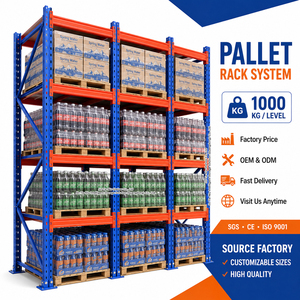
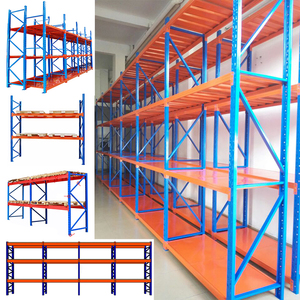
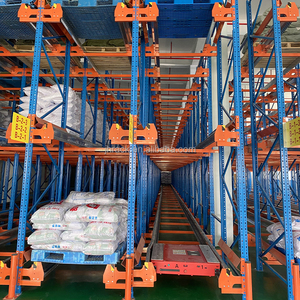
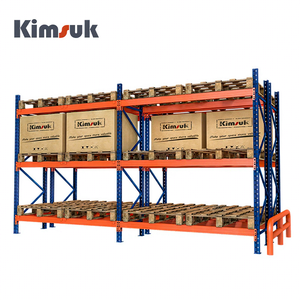
1. Technical Engineering & CE Certification Architecture in Industrial Pallet Racking
Modern material handling demands structural certainty, dynamic load stability, and strict compliance with international building and safety standards. As a premier CE Certified Pallet Warehouse Racking Manufacturer & Exporter, our engineering framework integrates Advanced Finite Element Analysis (FEA) to verify stress distribution, upright buckling safety factors, and load beam deflection limits under maximum nominal loads.
CE Certification according to EN 1090-1 and EN 15512 standards guarantees that every structural component—from roll-formed upright frames to load-bearing box beams—conforms to precise metallurgical and dimensional tolerances. European and North American industrial codes demand that racking systems accommodate not only static dead and live loads, but also dynamic impact forces caused by forklift placement, pallet placement placement shocks, and localized seismic accelerations.
Key Material Specifications: Cold-Rolled Structural Steel (Q235B vs. Q355B)
The structural integrity of industrial warehouse racking relies primarily on steel chemistry and cold-forming profiles. We utilize prime-grade, certified high-tensile structural coil steel to manufacture cold-rolled upright columns and beams:
- Q235B Carbon Structural Steel: Yield strength $f_y \ge 235 \text{ MPa}$, Tensile strength $R_m = 375\text{--}500 \text{ MPa}$. Excellent ductility, optimal for standard selective racking, medium-duty shelving, and non-seismic warehouse configurations.
- Q355B Low-Alloy High-Tensile Steel: Yield strength $f_y \ge 355 \text{ MPa}$, Tensile strength $R_m = 470\text{--}630 \text{ MPa}$. Utilized for deep-reach systems, high-bay AS/RS structures, heavy cantilever arms, and seismic-braced frame towers.
Every profile undergoes precision multi-stage roll forming, ensuring consistent wall thickness tolerances ($\pm 0.05\text{mm}$) and continuous longitudinal strength. Frame column profiles feature 11-fold to 13-fold cold-bent cross-sections, significantly elevating moment of inertia and resistance against torsional flexure compared to standard open channels.
Structural Safety Factor Standards & Deflection Tolerances
In accordance with FEM 10.2.02 and ANSI/RMI MH16.1 specs, our rack design safety coefficient is calculated with a strict material factor $\gamma_M = 1.1$ and load factor $\gamma_F = 1.4$. Beam vertical deflection under full load is limited to a maximum of L/200 (where L is clear beam length), preventing permanent deformation and ensuring seamless mechanical interface with reach trucks, VNA guided vehicles, and automated shuttle carriers.
2. Enterprise Manufacturing Advantages & Technical Capabilities
Backing global supply chains with reliable, structural-grade storage solutions requires vertically integrated manufacturing capabilities, stringent quality assurance protocols, and deep regional logistics expertise. Operating with over 20 years of racking manufacturing leadership, our enterprise infrastructure guarantees consistency from raw coil handling to final container loading.
Robotic Precision Manufacturing
Automated CNC roll-forming lines and robotic continuous welding stations deliver structural beam connectors with zero weld splatter and 100% penetration weld integrity.
Seismic Engineering & R-001 Support
Engineered frame bracing patterns, heavy-duty baseplates, and high-expansion floor anchors evaluated against local dynamic seismic regulations and spectral acceleration curves.
Coastal & Cold Storage Protection
Electrostatic thermosetting epoxy powder coating (60–80 µm) and hot-dip galvanizing options designed to withstand high humidity, coastal salt air, and freezing condensation (-30°C).
Export Logistics Staging & Packaging
Component bundlings categorized by bay, numbered matching engineering CAD sub-layouts, ensuring rapid customs clearing and zero site installation delays.
Turnkey CAD / BIM Design Services
Complete structural layout calculations, pallet clearance matrix modeling, floor loading point studies, and dynamic simulation for fork truck turning radiuses.
Global Compliance & Traceability
Full raw steel heat certificate tracking, 500-hour salt spray corrosion testing validation, and factory acceptance test (FAT) documentation available for every shipment batch.
3. Future Warehouse Racking Procurement & Sourcing Trends (2025–2030)
The industrial storage landscape is undergoing a structural transition driven by rising commercial real estate costs, supply chain volatility, e-commerce fulfillment speed, and automated material handling integration. Procurement executives and logistics engineers must select structural racking systems that remain adaptable for decades while supporting smart warehouse automation.
A. Modular Retrofitting & Hybrid High-Density Systems
Modern distribution centers are moving away from fixed single-purpose rack layouts. Future-proof procurement focuses on interchangeable teardrop and box beam profiles that allow seamless transition from conventional 100% selective racking to double-deep, push-back, or Pallet Shuttle configurations. Modular teardrop punchings permit vertical beam adjustments at 50mm or 75mm increments without requiring structural disassembly.
B. Convergence of Racking with Radio Shuttle & AS/RS Automation
With industrial land values escalating globally, industrial engineering projects prioritize height expansion (up to 24–40 meters). Traditional manual forklift operations are increasingly supplemented by semi-automated Four-Way Pallet Shuttles and fully automated Stacker Crane AS/RS racking frameworks. Sourcing decisions now evaluate structural steel dynamic resistance and rail tolerance specs ($\pm 1.5\text{mm}$) required for high-speed robotic shuttle movement.
C. Lifecycle Carbon Footprint & Sustainable Steel Manufacturing
Global logistics operators require transparent Environmental Product Declarations (EPD) and recycled steel content disclosures. Utilizing green energy electric arc furnace (EAF) steel coils and solvent-free powder coatings reduces the carbon footprint per pallet position by up to 28%, satisfying corporate ESG metrics without sacrificing mechanical yield properties.
4. Industry Development Trends & Application Scenarios
Different industrial sectors exhibit distinct storage density, throughput velocity, and environmental challenges. Sourcing the optimal rack layout requires matching operational workflows with structural capacity:
- Cold Chain Food & Beverage: Deep-lane Drive-In and Radio Shuttle systems maximize thermal efficiency inside frozen storage rooms (-25°C). Reduced aisle volume minimizes compressor refrigeration energy costs.
- 3PL Logistics & Fast-Moving Goods (FMCG): Heavy-duty Selective Pallet Racking remains the dominant architecture due to 100% immediate pallet access, high SKU diversity handling, and zero forklift restriction.
- Automotive & Industrial Manufacturing: Heavy-duty Cantilever Racks and customized long-span steel frames store un-palletized raw materials, bar stock, structural pipes, aluminum extrusions, and sheet metal plates.
- Free-Zone Assembly & E-Commerce Pick Hubs: Multi-tier Structural Steel Mezzanines convert tall overhead clearance into multi-level order picking platforms, doubling floor surface area without expanding warehouse footprints.
5. Industrial Racking System Performance Comparison Matrix
Compare key mechanical, operational, and financial indicators across major warehouse storage configurations to select the ideal system for your facility:
| Racking Architecture | Storage Density | Pallet Accessibility | Inventory Flow | Forklift Requirement | CAPEX Investment |
|---|---|---|---|---|---|
| Selective Pallet Racking | Baseline (30–40%) | 100% Direct Access | FIFO / LIFO | Standard Counterbalance / Reach | Economical / Low |
| Double Deep Racking | Medium-High (50–60%) | 50% Immediate Access | LIFO | Deep-Reach Forklift Truck | Moderate |
| Drive-In Racking | High (65–75%) | Lane-Dependent Access | LIFO (FIFO if Drive-Thru) | Standard Reach / Counterbalance | Moderate-High |
| Radio Shuttle Racking | Very High (75–85%) | Semi-Automated Lane Access | FIFO or LIFO Selectable | Standard Forklift + Shuttle Unit | High / Strong ROI |
| AS/RS Automated High-Bay | Maximum (85–95%) | 100% Automated System Access | Software Controlled WMS | Automated Stacker Crane | High Enterprise CAPEX |
| Cantilever Rack System | Specialized (Long Loads) | 100% Open Lateral Access | N/A (Bulk Material) | Side Loader / Standard Forklift | Moderate |
6. Strategic Sourcing & Engineering FAQ
Get authoritative engineering answers to common procurement questions from global warehouse managers, structural engineers, and logistics buyers.
Transform Your Warehouse Storage Efficiency Today
Partner with a certified global racking manufacturer. Contact our engineering team for free technical consultations, custom CAD drawings, FEA structural reports, and direct factory price quotes tailored to your logistics requirements.