0%

Pallet Rack Systems shape how safely and efficiently a warehouse stores, moves, and retrieves goods. The right setup depends on more than available floor space. Pallet size, load weight, forklift type, picking frequency, and ceiling height all affect the choice. A narrow-aisle layout may increase storage density, while selective racks can make individual pallets easier to reach. Each option brings trade-offs.

A useful design principle is: “Choose the rack for the load, the access pattern, and the building—not the other way around.” This is an editorially written line, not a verified quotation. No source was provided to confirm a named expert’s words, so attributing it to a person would be unreliable. That distinction matters when planning a system that supports daily operations.

This guide compares the top types of pallet rack systems, including selective, drive-in, push-back, pallet flow, and cantilever racks. It explains where each configuration fits, what compromises to expect, and which details deserve careful checking. A dense rack can look impressive on a floor plan. But if it slows picking or conflicts with equipment, the design may disappoint. The best choice is the one that fits real loads and routines, not just a warehouse diagram.
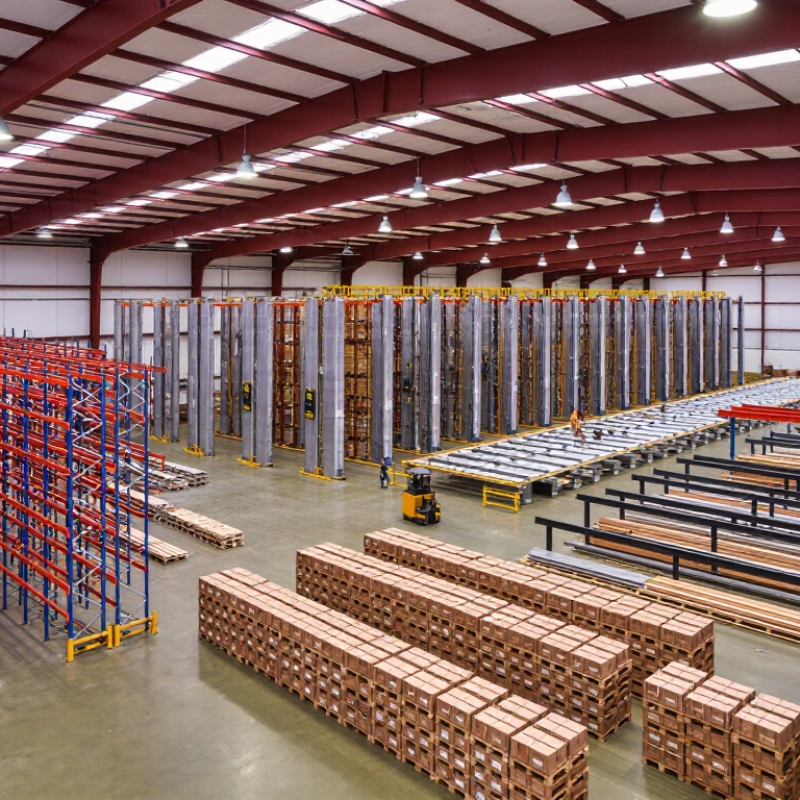
What Are the Top Types of Pallet Rack Systems?

How Pallet Rack Systems Organize Warehouse Storage

Pallet rack systems organize warehouse storage by giving each pallet a defined position, access route, and load limit. Selective racks keep every pallet directly reachable, which suits facilities with many product lines. Drive-in racks use fewer aisles and store pallets in deep lanes, but access is less flexible. Pallet-flow racks move loads forward on rollers, supporting first-in, first-out rotation when the system is designed and operated correctly. Small details matter. A clear aisle saves time.

A practical layout groups products by how often they move, then places fast-moving stock near picking and dispatch areas. Rack labels should match inventory records, and aisle signs should be readable from a forklift. Leave enough clearance for the equipment and pallet dimensions in use. No layout is perfect; a neat plan can still create congestion when replenishment and picking happen in the same aisle. Review traffic patterns during busy shifts, not only on a drawing.

Tips: Keep heavier pallets on lower levels, and verify beam capacities before loading. Mark damaged uprights for prompt inspection, and keep floor locations clear. Test new slot assignments with a small group of products before changing an entire zone.

Selective Racking for Direct Access to Every Pallet

Selective racking gives forklift operators direct access to each pallet position, making it practical for warehouses handling many SKUs in modest quantities. A worker can retrieve a specific pallet without moving the one in front. That matters when orders change by the hour. It also makes stock rotation and visual checks easier, though the layout alone does not guarantee either.

The trade-off is floor space. Each row needs operating aisles, so selective racks usually store fewer pallets per square foot than high-density systems.

WERC’s 2023 DC Measures report lists median order-picking accuracy at 99.5%; that benchmark is not caused by rack type, but clear locations can support accurate picking. MHI’s 2024 Annual Industry Report found that 55% of respondents increased supply-chain technology investment in response to disruptions. It is a useful reminder that layouts must adapt.

Still, a simpler rack can be the better choice. Check aisle width against the actual lift truck, label each bay, and post engineered load limits. Inspect beam locks and uprights regularly. Small details matter.

Selective access can feel inefficient when every aisle is full of steel; I would review SKU velocity and access needs before trading flexibility for density.

Drive-In and Drive-Through Racking for Dense Storage

Drive-in and drive-through pallet racking use deep lanes to store pallets several positions deep, reducing the number of aisles. In a drive-in layout, forklifts enter a lane from one end, so the last pallet loaded is usually the first retrieved. This works best when products move in batches and each lane holds one product type. Fewer aisles. More storage density.

Drive-through racking has access at both ends, allowing pallets to enter from one side and leave from the other. It can support first-in, first-out rotation when loading and picking are managed consistently. Picture a chilled-storage room with long lanes of identical cartons: the arrangement can save floor space while keeping stock moving in order. But it is not automatically faster. Poorly planned lanes can leave workers waiting for forklift access.

These systems need careful layout decisions. Pallets should have consistent dimensions, and the rack must be designed for the loads and handling equipment in use. Deep lanes can make slow-moving stock harder to reach, while frequent changes in product mix may reduce their advantage. Operators also need clear procedures for entering lanes and checking rack components for damage. In practice, the most space-efficient plan may still need adjustment after observing real picking patterns.

Push-Back and Pallet Flow Racking for High-Volume Inventory

For high-volume inventory, push-back and pallet flow racking reduce the number of aisles needed. Push-back lanes store pallets several positions deep, with each new pallet moving the previous one back. This suits last-in, first-out stock, such as products with stable shelf life. Pallet flow uses inclined rollers: operators load from the rear and pick from the front. That supports first-in, first-out rotation. A useful detail: flow lanes need smooth, consistent pallets; damaged boards can interrupt movement.

The choice affects labor as well as storage density. MHI and Deloitte’s 2024 Annual Industry Report found that 55% of surveyed supply chain leaders planned to increase technology investment. That figure does not prove a rack system will improve throughput, but it reflects pressure to make operations more efficient. Push-back can reduce travel between aisles, while flow lanes can separate replenishment from picking. Test both against actual order profiles, pallet weights, and forklift access. Start small. Measure replenishment time and retrieval errors. A lane that looks efficient on a layout may stall during a busy shift. I would also review impact protection, load ratings, and inspection routines with a qualified rack professional. The awkward part? Dense storage leaves less room for mistakes.

What Are the Top Types of Pallet Rack Systems?

Typical lane depth by system (pallet positions deep)

Push-back racks commonly store pallets about 2–6 deep, while pallet flow racks can be configured for deeper lanes, often around 2–20 pallets. Deeper lanes can increase storage density, but system choice also depends on stock rotation, selectivity, pallet characteristics, and facility design. Ranges are indicative; actual configurations vary.

Cantilever Racking for Long or Irregular Loads

Cantilever racking suits lumber, steel tube, trim, and furniture parts that overhang ordinary pallet positions. Its open front removes upright obstructions, making long loads easier to place with a forklift. Arms support each level; choose their length and capacity for the actual load, not an average bundle. Measure the longest items, including uneven ends. Small details matter.

MHI’s 2024 Annual Industry Report found that 55% of surveyed supply-chain professionals planned to increase technology investment. That figure is not a rack-performance measure, but it reflects growing attention to warehouse efficiency. For cantilever layouts, map forklift turning space and aisle width before installation. Keep heavy loads on lower arms, and secure items against rolling or shifting. OSHA’s material-handling rule, 29 CFR 1910.176(b), requires stored materials to be secured against sliding or collapse. A practical review should also check floor condition, rack anchoring, and load labels. One limitation: irregular bundles rarely behave like neat drawings suggest. Test a representative load and adjust the layout before filling every bay.

What Are the Top Types of Pallet Rack Systems? - Cantilever Racking for Long or Irregular Loads

Rack system How it stores loads Best suited for Access and selectivity Key considerations
Selective pallet racking Pallets rest on horizontal beams in individual storage positions, with aisles between rack rows. Warehouses with many product lines, varied inventory, or frequent picking. Direct access to each pallet; typically high selectivity. Requires operating aisles, so storage density is generally lower than in high-density systems.
Double-deep racking Pallet positions are arranged two deep, reducing the number of aisles compared with single-deep selective racking. Facilities storing multiple pallets of the same or a smaller range of products. The front pallet must generally be moved to reach the rear pallet; a reach truck with suitable reach is commonly used. Less selective than single-deep racking and requires compatible handling equipment.
Drive-in / drive-through racking Forklifts enter storage lanes and place pallets on rails; drive-in typically has one access end, while drive-through can be accessed from both ends. High volumes of similar products, especially where space utilization is a priority. Lower selectivity than aisle-based systems; lane access and loading sequence affect retrieval. Forklifts operate inside the rack structure, so careful operating procedures and suitable load and pallet consistency are important.
Push-back racking Pallets sit on nested carts or rollers and are pushed back along inclined lanes as additional pallets are loaded. Several pallets per product where storage density and access from the aisle are both useful. Pallets are typically retrieved from the same aisle face; last-in, first-out (LIFO) access is common. Lane depth, pallet condition, and load compatibility should be matched to the system design.
Pallet flow racking Pallets move by gravity on inclined roller tracks from the loading side toward the picking side. High-throughput stock rotation and operations that benefit from separate replenishment and picking aisles. Often supports first-in, first-out (FIFO) stock flow, with loading and retrieval from opposite ends. Requires compatible pallets and properly designed flow lanes, brakes, and separators.
Cantilever racking Horizontal arms extend from upright columns, leaving the front of the rack open without front columns or beams across the load face. Long or irregular loads such as lumber, pipe, tubing, bar stock, panels, and furniture components. Loads can generally be accessed from the open face; forklift or other handling method depends on load size and site layout. Arm spacing, load length, weight distribution, rack capacity, and floor anchoring should be specified for the actual application.

FAQS

How do pallet rack systems organize warehouse storage?

They assign each pallet a location, access route, and load limit. Clear labels and open aisles help workers find stock. Small details matter.

When is selective racking a practical choice?

It suits warehouses with many product types and modest quantities. Each pallet remains directly reachable, but the extra aisles use floor space.

What is the main trade-off with drive-in racks?

They store pallets in deep lanes and need fewer aisles. Access is less flexible, so they may not suit stock with frequent, varied picking.

How does pallet-flow racking support stock rotation?

Rollers move loads forward, which can support first-in, first-out rotation. Correct system design and operation matter. It is not automatic.

Where should fast-moving products be placed?

Place them near picking and dispatch areas when practical. Check traffic during busy shifts, since replenishment and picking can conflict in one aisle.

What should workers check before loading a rack?

Keep heavier pallets on lower levels and verify beam capacities. Inspect beam locks and uprights, and mark damage for prompt review. Don’t guess.

What makes cantilever racking useful for long items?

Its open front supports lumber, tubes, trim, and other irregular loads. Measure the longest items, including uneven ends, and match arm length to the actual load.

How can a warehouse test a new rack layout?

Try new slot assignments with a small product group before changing a whole zone. A clean drawing can still mislead; real loads and forklift turns may reveal problems.

Conclusion

Pallet Rack Systems help warehouses make better use of available space while keeping inventory organized and accessible. The right configuration depends on the types of goods being stored, how often they are needed, and the desired balance between storage density and selectivity. Selective racking provides direct access to every pallet, making it a flexible choice for inventories with many product types or frequent item retrieval.

For higher-density storage, drive-in and drive-through systems allow forklifts to enter storage lanes, while push-back and pallet flow designs support efficient handling of larger quantities of inventory. Cantilever racking is suited to long or irregularly shaped loads that do not fit easily on standard shelves. By matching a rack type to warehouse workflows and load characteristics, businesses can organize stock efficiently and support smoother day-to-day operations.

Oliver

Oliver

Oliver is a professional marketing specialist who combines a strong understanding of the company’s products with a clear, practical approach to sharing useful information. Through regular articles on the company website, he explains product features, applications, and considerations that help......