Choosing the best Pallet Racking system in 2026 is not a contest with one universal winner. The right layout depends on SKU variety, pallet dimensions, inventory turnover, available floor space, and required access. A selective rack gives forklifts direct access to each pallet. Drive-in and push-back systems store more pallets in less space, but reduce immediate access to individual loads. Pallet flow can support first-in, first-out movement. Each choice involves trade-offs.
Industry reports offer useful context, not a ready-made rack specification. MHI and Deloitte’s 2024 Annual Industry Report found that 55% of respondents planned to increase supply-chain technology investment. That shift makes it important to assess how rack design will work with scanners, conveyors, and automated equipment. WERC’s DC Measures report also provides warehouse performance benchmarks that can help teams examine productivity and accuracy. Neither report identifies a single best rack for every facility.
Start with the work your warehouse actually does. Measure clear height, aisle width, floor conditions, and daily pallet movements. Check load ratings and confirm that the proposed layout fits the building and applicable safety requirements. Then compare storage density with access needs and operating costs. A dense layout may look efficient on paper. It can still slow picking or create awkward forklift movements. That detail is easy to miss. This guide compares common systems and explains what to evaluate before choosing one. A qualified rack designer should verify the final plan against site conditions and equipment specifications.
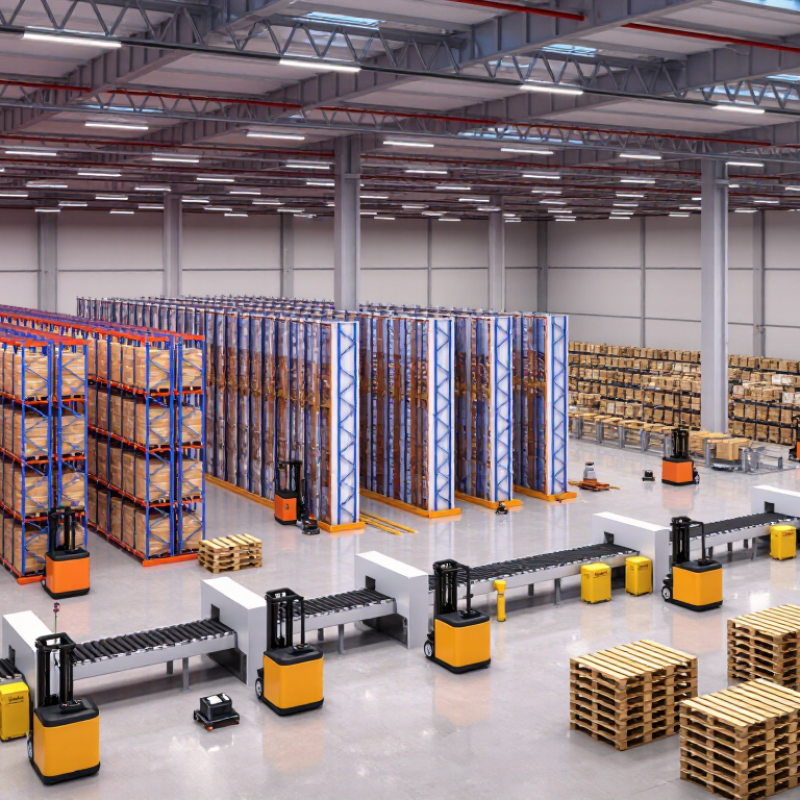
A 48 × 40-inch GMA pallet is a useful starting point for rack planning, not a complete load specification.
The pallet footprint tells you how much floor area it occupies, but the product and packaging can change the dimensions that matter. Measure the actual loaded pallet, including any overhang beyond the deck. Measure the actual load. Record its height from the floor and note whether the load is centered, stable, and suitable for the intended handling direction.
A tall, uneven stack of cartons behaves differently from a compact, shrink-wrapped load. Small details matter.
Weight needs the same attention. Record the heaviest expected pallet, not just an average, and include the pallet itself. Rack capacity depends on how loads are positioned and supported, so confirm the planned arrangement with a qualified rack designer and the system’s published ratings.
Also check that the pallet’s condition and underside support are appropriate for the rack type; damaged boards or unsupported gaps can create problems. Leave practical clearance for the lift truck and for placing and retrieving loads.
An occasional overhang may seem harmless, but repeated overhang can reduce clearance and increase the chance of contact. Real loads are rarely as neat as a drawing suggests.
Compare Selective, Drive-In, Push-Back, and Pallet-Flow Rack by FIFO/LIFO
The best system depends on how stock moves, not just how many pallets fit.
Selective racking gives direct access to each pallet, making rotation and picking straightforward. It can support FIFO, but staff and inventory controls must maintain that order.
Drive-in racking stores pallets several positions deep, using fewer aisles. It usually works as LIFO: the last pallet loaded is the first one retrieved. That matters for uniform products with slower turnover.
Push-back rack also operates on a LIFO basis. Loading a pallet pushes earlier pallets farther back along a lane, so access is convenient but not individually selective.
Pallet-flow rack uses inclined rollers: new pallets enter one end and move toward the picking face. This supports FIFO and suits goods that need orderly rotation. Flow lanes need compatible pallets and routine checks; small problems can interrupt movement.
There is no universal winner. A high-density layout can look efficient on paper and still slow picking.
Tips: Map your actual pallet flow before choosing. Check SKU variety, daily pick frequency, pallet condition, and forklift clearance. Test the busiest lane, too. A practical detail is easy to miss.
The best pallet racking system depends on the equipment moving through your warehouse. A reach truck may need narrower aisles than a counterbalance forklift. Check turning radius, lift height, and mast clearance against the actual truck specifications. A few extra inches can change how safely operators position pallets.
Small gaps matter.
Rack layout also needs to account for pallet size, load weight, and beam spacing. Under ANSI MH16.1 design criteria, steel storage racks are engineered for defined loads and structural conditions. A qualified rack designer should review frame capacity, bracing, connections, and applicable seismic forces. Confirm which edition and local requirements apply to your project. A drawing alone cannot confirm that an installed rack matches its design.
Walk the proposed layout with warehouse staff before installation. Look for columns, sprinkler lines, dock approaches, and places where forklifts must turn or reverse. A plan can look tidy on paper and still frustrate operators.
That is easy to miss.
Record pallet dimensions and loaded weights rather than relying on estimates, then check the finished installation against the approved drawings. If equipment changes later, revisit aisle clearances and rack loads instead of assuming the old layout still works.
The best system is not simply the one with the highest capacity. It must keep each stored load stable under real warehouse conditions. OSHA 29 CFR 1910.176(b) requires stored materials to be secured against sliding or collapse. The rule does not specify one rack type or a universal rack inspection schedule. It sets a practical safety expectation.
Check that pallet weight and dimensions match the rack’s posted capacity and installation details. Look for bent uprights, loose connections, missing locking pins, and beams that sit unevenly. A pallet with a cracked board can shift even when the rack looks sound. Keep loads centered, avoid overhang that could catch nearby equipment, and place heavier items on lower levels when the layout permits. That matters. Workers should be able to see damaged pallets and report them without guessing whether a small defect is serious.
Aisles need enough clearance for the equipment and loads moving through them. Recheck conditions after a layout change or an impact; a rack can appear fine from one angle. I would not treat a capacity label as proof that every load is safe. Labels, training, and routine checks help, but none replaces sound judgment. And judgment can miss things. Record concerns, restrict access to visibly damaged areas, and have qualified personnel assess repairs before the rack returns to service.
What Is the Best Pallet Racking System in 2026?
Select the Best-Fit System by SKU Count, Throughput, and Selectivity
The best rack depends on how many SKUs you store, how quickly pallets move, and whether every pallet needs direct access. The U.S. Census Bureau reported that e-commerce represented 16.1% of U.S. retail sales in 2024. That shift can mean more small, frequent orders, but it does not make one rack type right for every warehouse. Start with SKU-level data: pallet positions, weekly picks, replenishment frequency, and seasonal peaks.
Selective pallet rack suits high SKU variety and direct access, though it uses more aisle space. Double-deep and push-back systems add density but reduce immediate access to some pallets. Drive-in rack can work for fewer SKUs stored in larger batches. For fast-moving, date-sensitive goods, pallet flow can support first-in, first-out rotation. WERC’s 2024 DC Measures report benchmarks measures such as order-picking productivity and inventory accuracy. Track those measures before and after a layout change.
Model the busy day, not just average inventory. Check forklift turning space, beam clearances, load ratings, and replenishment routes with a qualified rack professional. A fuller layout may look efficient on paper. It can also slow picking if operators must wait for access. Test it. Review actual travel paths and congestion after installation; forecasts miss things.
Compare typical pallet-position selectivity to find a system that fits your SKU count and throughput needs.
Selectivity is the share of pallet positions that can be accessed directly. Values are representative planning estimates for common layouts, not guaranteed specifications; actual results vary with design and operation. Selective racks suit many SKUs and high selectivity, while drive-in racks favor fewer SKUs stored in larger quantities. Pallet flow supports FIFO rotation and higher throughput; push-back and double-deep racks trade some selectivity for denser storage.
Measure the loaded pallet, including overhang. Record its height, width, and weight, including the pallet itself. Actual loads vary.
No. That footprint is only a starting point. Cartons, wrapping, and uneven stacking can change the load’s dimensions.
Check the truck’s turning radius, lift height, and mast clearance. A few inches can affect safe pallet placement. Small gaps matter.
A qualified designer should check frame capacity, bracing, connections, load positions, and relevant site conditions. A drawing alone is not enough.
Walk the layout with staff. Check columns, sprinkler lines, dock approaches, and forklift turning or reversing areas. Paper plans can miss awkward corners.
Center pallets and match their weight and size to posted rack capacity. Secure loads against shifting or collapse. That matters.
Report bent uprights, loose connections, missing locking pins, uneven beams, and cracked pallet boards. Small defects can matter.
Recheck clearances and inspect the affected area. Restrict access to visible damage, then have qualified personnel assess repairs. I might miss a defect from one angle.
Choosing the best Pallet Racking system in 2026 starts with the loads it must support. Use the standard 48 × 40-inch GMA pallet as a reference, then confirm each pallet’s actual dimensions, weight, condition, and load stability. These details affect rack capacity, beam spacing, clearances, and safe handling. Selective rack offers direct access to each pallet and suits operations with many SKUs. Drive-in rack increases storage density but typically limits selectivity and works well with LIFO inventory. Push-back systems also favor LIFO, while pallet-flow racks support FIFO movement through gravity-fed lanes.
The right layout must match aisle widths, lift-truck capabilities, building constraints, and the required storage density. Rack design should follow applicable ANSI MH16.1 criteria, with loads placed and handled safely in keeping with OSHA 29 CFR 1910.176(b). Ultimately, compare SKU count, throughput, selectivity, and space efficiency to find a system that supports both operational needs and stable, orderly storage.